Cucumber Caprese Salad: A Fresh, Vibrant Twist on the Italian Classic
The classic Caprese salad — sliced tomatoes, fresh mozzarella, and basil drizzled with good olive oil — is one of the most beloved and enduring salads in the world. Its elegance lies in its simplicity. Add cucumber to that combination and something interesting happens: the clean, cool crunch of cucumber brings a refreshing dimension that makes the salad feel lighter, more vibrant, and even more suited to warm-weather eating than the original.
Cucumber Caprese Salad takes the timeless Italian foundation and gives it a fresh, hydrating lift. The crisp cucumber adds textural contrast to the soft mozzarella and juicy tomatoes, contributes a cooling quality that makes the salad genuinely refreshing rather than simply pleasant, and extends the volume of the dish in a way that makes it more suitable as a side salad for a crowd without compromising any of the qualities that make Caprese so appealing in the first place.
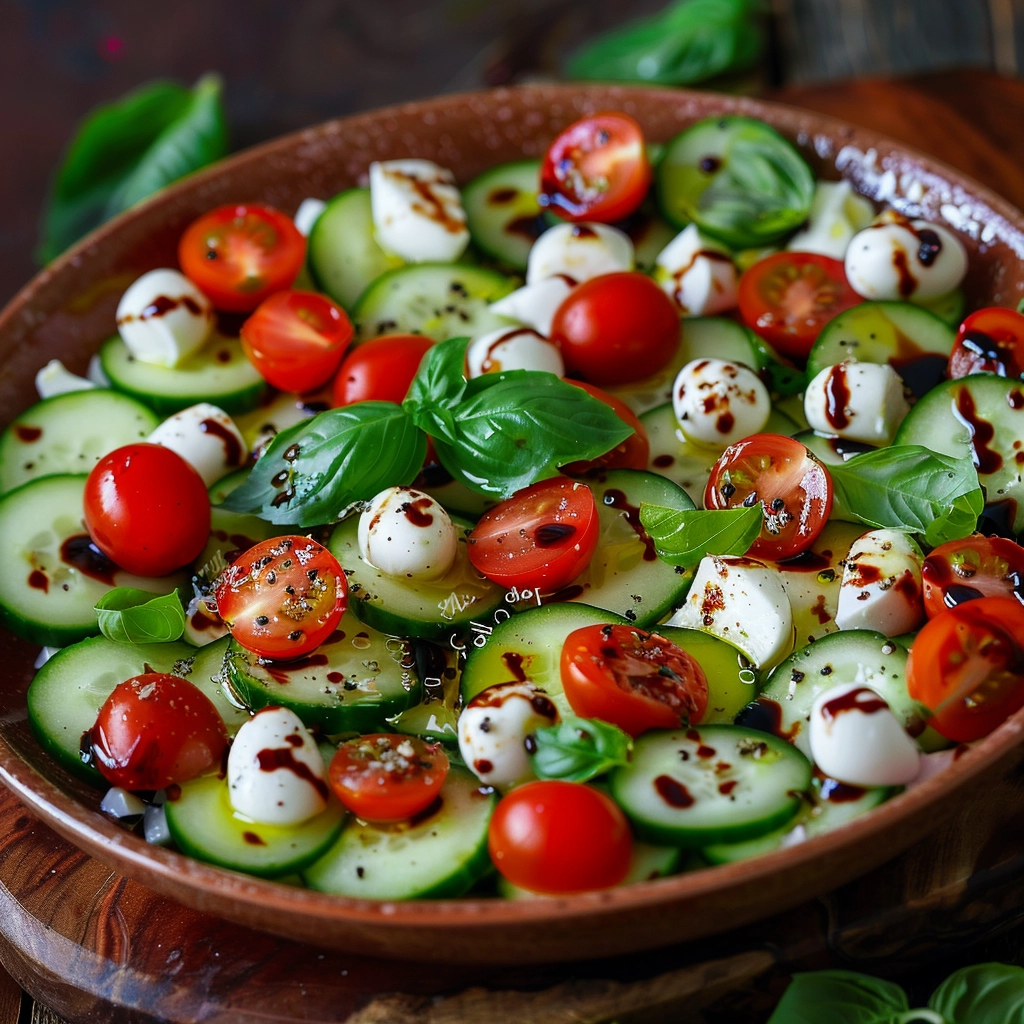
It comes together in under fifteen minutes, requires no cooking, and depends entirely on the quality of its ingredients — making it the kind of salad that rewards a trip to the farmers market and punishes the use of mediocre produce. Make it with peak-season tomatoes, genuinely fresh mozzarella, fragrant basil, and a drizzle of excellent olive oil, and it is a dish that stops conversation at the table. Make it with underripe tomatoes and rubbery cheese, and no amount of technique will save it.
This article covers everything — ingredient selection, two dressing options, a clear step-by-step recipe, expert tips, serving suggestions, creative variations, nutritional information, and a thorough FAQ section.
What Makes This Salad Special
Cucumber Caprese Salad works because cucumber and the classic Caprese components complement each other across every dimension — flavor, texture, color, and temperature.
Flavor-wise, cucumber is mild and clean with a subtle grassy freshness that does not compete with the sweet acidity of tomato, the creamy richness of mozzarella, or the peppery, slightly anise-like quality of fresh basil. It occupies the neutral supporting role that allows the other flavors to remain the focus while providing its own quiet contribution to every bite.
Texturally, the crunch of fresh cucumber against the yielding softness of fresh mozzarella and the juicy bite of ripe tomato creates exactly the kind of variety that makes a salad genuinely interesting throughout rather than texturally monotonous from start to finish.
The addition of cucumber also increases the practical versatility of the dish. Classic Caprese is often served as a starter in modest, carefully arranged portions. Cucumber Caprese Salad, with its increased volume and heartier character, works equally well as a starter, a generous side dish, or a light main course — making it one of the most flexible salads in the summer cooking repertoire.
Key Ingredients
The Cucumber
English cucumber is the best choice — its thin, edible skin adds color and texture, its small seeds require no removal, and its clean, mild flavor suits the delicate character of the salad perfectly. Slice into rounds a quarter inch thick or cut at a slight diagonal for a more visually interesting presentation. The skin should be left on for both color and nutritional value.
Persian cucumbers are an equally excellent alternative — smaller, slightly sweeter, and wonderfully crisp. Two to three Persian cucumbers replace one English cucumber in this recipe.
For a more elegant, composed presentation, use a vegetable peeler to create long, thin cucumber ribbons that can be layered between the mozzarella and tomato slices in the classic Caprese arrangement.
The Tomatoes
Ripe, in-season tomatoes are non-negotiable. A Caprese salad made with underripe tomatoes is a fundamentally different and inferior dish. During peak summer, heirloom tomatoes in multiple colors — red, yellow, orange, green, and purple — make the most visually spectacular and flavorful salad. Cherry tomatoes halved are practical and sweet. Beefsteak tomatoes sliced thick provide the classic Caprese presentation. Roma tomatoes offer a balance of meatiness and sweetness with less excess moisture.
Whatever variety you choose, bring the tomatoes to room temperature before slicing and serving. Cold tomatoes have significantly muted flavor compared to room-temperature ones — a detail that makes a noticeable difference in the finished salad.
The Mozzarella
Fresh mozzarella is essential — not the low-moisture, pre-shredded variety used for pizza, but the soft, milky, water-packed fresh mozzarella that comes in balls or logs. Its delicate, creamy, slightly tangy flavor and soft, yielding texture are what define the Caprese experience.
Burrata — fresh mozzarella with a rich, creamy stracciatella center — is the most indulgent upgrade available. When cut open, burrata spills its cream into the salad dressing, enriching every other component instantly. It is worth using for special occasions and produces one of the most impressive salads in the entire Italian repertoire.
Ciliegine — small cherry-sized fresh mozzarella balls — are the most practical option for a tossed salad presentation, requiring no slicing and distributing evenly through the cucumber and tomato pieces.
The Basil
Fresh basil is the herb of this salad — fragrant, slightly peppery, and unmistakably Italian. Use the freshest basil available, tear rather than cut the leaves to avoid browning at the edges, and add it at the very last moment before serving. Basil oxidizes and darkens quickly once torn and exposed to air and acidic dressing.
For variation, fresh mint adds a cool, slightly sweet dimension that complements both cucumber and tomato beautifully. A combination of basil and mint is particularly refreshing.
The Dressing
Two dressing approaches work brilliantly for Cucumber Caprese Salad.
Classic Olive Oil and Balsamic:
- 3 tablespoons extra virgin olive oil
- 1 tablespoon balsamic glaze or reduction
- Flaky sea salt
- Freshly cracked black pepper
This is the most traditional approach — simple, respectful of the ingredients, and deeply satisfying. Use the best olive oil available. The balsamic glaze adds a sweet, tangy depth that brings all the components together.
Lemon Herb Vinaigrette:
- 3 tablespoons extra virgin olive oil
- 1½ tablespoons fresh lemon juice
- 1 teaspoon lemon zest
- 1 small garlic clove, very finely minced
- ½ teaspoon honey
- Salt and black pepper to taste
Whisk until emulsified. This dressing is brighter and more acidic than the balsamic version — particularly well-suited to cucumber’s cool character and ideal for those who find balsamic glaze too sweet.
Step-by-Step Recipe
Prep Time: 15 minutes Cook Time: None Total Time: 15 minutes Servings: 4 to 6
Ingredients
- 1 large English cucumber, sliced into ¼-inch rounds
- 2 cups cherry tomatoes, halved, or 3 medium heirloom tomatoes, sliced
- 8 oz fresh mozzarella, sliced or in ciliegine balls
- ½ cup fresh basil leaves, torn
- 3 tablespoons extra virgin olive oil
- 1 tablespoon balsamic glaze
- Flaky sea salt and freshly cracked black pepper to taste
- Optional: fresh mint leaves, red pepper flakes, or microgreens
Instructions
Step 1 — Prepare the vegetables and cheese. Wash and dry the cucumber thoroughly. Slice into rounds or diagonal pieces approximately a quarter inch thick. If using cherry tomatoes, halve them. If using large tomatoes, slice thickly — at least half an inch — so they hold up against the other components. Slice the fresh mozzarella to a similar thickness as the tomatoes or use ciliegine whole. Allow all components to come to room temperature if they have been refrigerated — cold cheese and tomatoes taste noticeably less flavorful than room-temperature ones.
Step 2 — Arrange or toss the salad. For a composed, platter-style presentation: arrange the cucumber slices, tomato slices, and mozzarella in overlapping rows or concentric circles on a large serving platter, alternating the components for visual variety. For a casual, tossed presentation: combine the cucumber, tomatoes, and mozzarella in a large bowl and gently fold together once or twice.
Step 3 — Dress the salad. Drizzle the extra virgin olive oil evenly over the entire surface of the salad. Follow with the balsamic glaze, applied in a thin zigzag pattern for visual appeal. Season generously with flaky sea salt — this step is critical and should not be timid. Freshly crack black pepper over everything.
Step 4 — Add the basil. Tear the fresh basil leaves directly over the salad immediately before serving. If using mint as well, tear and add at this stage. The herbs should be added last and as close to serving time as possible to preserve their color, fragrance, and flavor.
Step 5 — Serve immediately. Cucumber Caprese Salad is at its absolute best within fifteen to twenty minutes of assembly. The salt draws moisture from the tomatoes and cucumber over time, gradually diluting the dressing and softening the vegetables. Serve promptly and serve the remaining dressing alongside for guests who prefer extra.
Expert Tips
Use the best olive oil you own. In a salad with this few ingredients, the quality of every component is immediately apparent. A grassy, peppery, genuinely fresh extra virgin olive oil elevates the entire dish. A bland, low-quality oil flattens it. This is the recipe to use that bottle of good single-origin olive oil you have been saving.
Salt generously and use flaky salt. Flaky sea salt — Maldon is the most widely available — dissolves more slowly than fine salt, providing small bursts of seasoning in each bite rather than uniform saltiness throughout. It also adds a pleasant, subtle crunch. Season more than you think is necessary — tomatoes and mozzarella absorb salt well and require generous seasoning to taste their best.
Bring everything to room temperature. Cold mozzarella tastes rubbery and mild. Cold tomatoes taste flat and slightly mealy. Remove both from the refrigerator at least twenty to thirty minutes before assembly. Room-temperature ingredients release more aromatic compounds and taste significantly more flavorful.
Tear the basil, never cut it. Cutting basil with a knife bruises the cell walls along the cut edge, causing rapid oxidation and blackening that looks unappealing and tastes slightly bitter. Tearing produces a more irregular, rustic edge that oxidizes far more slowly and stays bright green longer.
Do not dress too far in advance. Salt draws moisture from the tomatoes and cucumber, gradually diluting the olive oil and balsamic into a watery pool at the bottom of the dish. Dress immediately before serving or at the table in front of guests for the best result.
Pat the mozzarella dry. Fresh mozzarella is packed in water and retains significant moisture. Slices placed directly onto the salad without patting dry introduce excess water that dilutes the dressing immediately. Place slices between paper towels and press gently before using.
Serving Suggestions
Cucumber Caprese Salad works in multiple roles depending on the occasion and the meal around it.
As a starter, serve on a large platter arranged in the classic composed style — overlapping slices of cucumber, tomato, and mozzarella in a visually impressive pattern. A final drizzle of excellent olive oil and a scatter of basil makes a presentation that is elegant enough for a dinner party without requiring any effort beyond what the recipe demands.
As a side dish, serve alongside grilled chicken, seared salmon, pasta dishes, or any summer main that benefits from a fresh, bright accompaniment. The salad’s acidity from the balsamic and its coolness from the cucumber make it a natural counterpoint to grilled or roasted proteins.
As part of a larger spread, include it on an antipasto board alongside cured meats, olives, roasted peppers, and bread. It provides the fresh element that balances the richness of the other components and is reliably the most colorful dish on the table.
Serve with crusty sourdough, ciabatta, or focaccia alongside to scoop up the olive oil and tomato juices that pool at the bottom of the dish — one of the most simple and deeply satisfying eating experiences in Italian cuisine.
Creative Variations
Strawberry Cucumber Caprese: Add one cup of sliced fresh strawberries to the salad alongside the tomatoes. The strawberry’s sweetness and color against the cucumber and mozzarella creates a visually stunning, unexpectedly harmonious combination. Use a lemon honey dressing rather than balsamic.
Watermelon Cucumber Caprese: Replace half the tomatoes with cubed fresh watermelon. The combination of sweet watermelon, cool cucumber, and creamy mozzarella with mint and balsamic is one of the most refreshing summer salads imaginable.
Roasted Tomato Cucumber Caprese: Roast the cherry tomatoes at 400°F (200°C) for 20 minutes until caramelized and slightly collapsed. Allow to cool and add to the salad alongside the fresh cucumber and mozzarella. The concentrated, caramelized tomatoes add a sweet-savory depth completely different from raw tomatoes.
Burrata Cucumber Caprese: Replace the fresh mozzarella with one or two balls of burrata placed whole in the center of the arranged salad. Cut them open at the table — the cream spills into the dressing and transforms the entire dish instantly. Reserve for occasions when you want to genuinely impress.
Avocado Cucumber Caprese: Add one ripe avocado, sliced, alongside the cucumber and mozzarella. The avocado introduces a creamy richness that suits the lemon herb dressing particularly well and makes the salad more substantial as a light main course.
Greek Cucumber Caprese: Swap the mozzarella for crumbled feta, add Kalamata olives and thinly sliced red onion, and use a lemon-oregano dressing. This variation bridges Caprese and Greek salad in a way that is genuinely delicious.
Nutritional Information
Cucumber Caprese Salad is one of the most nutritionally clean dishes in the summer cooking repertoire — genuinely nourishing without any compromise on flavor.
A standard serving provides approximately 220 to 280 calories, 10 to 14 grams of protein from the mozzarella, 8 to 12 grams of carbohydrates primarily from the tomatoes and cucumber, and 14 to 18 grams of fat primarily from the olive oil and mozzarella.
Tomatoes provide lycopene — a carotenoid with extensive research supporting its role in cardiovascular health — alongside vitamin C, vitamin K, and potassium. Cucumber contributes hydration, vitamin K, magnesium, and a range of B vitamins. Fresh mozzarella delivers calcium, phosphorus, and complete protein. Extra virgin olive oil contributes oleocanthal and oleic acid — both well-studied for their anti-inflammatory and cardiovascular-supportive properties. Fresh basil provides vitamin K and a range of volatile aromatic compounds including linalool and eugenol with documented antioxidant activity.
The salad is naturally gluten-free and can be made dairy-free by replacing the mozzarella with sliced avocado, marinated white beans, or a plant-based fresh mozzarella alternative.
Frequently Asked Questions
Q1. Can I make Cucumber Caprese Salad ahead of time?
The components can be prepared up to 24 hours in advance — slice the cucumber and store in an airtight container, prepare the tomatoes, and slice the mozzarella and store between paper towels. Mix the dressing and store in a jar. Assemble and dress the salad no more than 15 to 20 minutes before serving. Fully dressed salad does not store well — the salt draws moisture from the vegetables and the basil blackens within an hour.
Q2. How do I stop the salad from becoming watery?
Three practices minimize excess liquid. Pat the mozzarella dry before slicing. Salt the salad immediately before serving rather than in advance. Use a balsamic glaze — which is thick and syrupy — rather than regular balsamic vinegar, which is thin and dilutes easily in the presence of tomato juice. If excess liquid pools at the bottom of the bowl before serving, pour it off and add a final drizzle of fresh olive oil.
Q3. What is the difference between balsamic glaze and balsamic vinegar?
Balsamic vinegar is a thin, sharp, acidic liquid. Balsamic glaze is balsamic vinegar reduced with sugar until it becomes thick, syrupy, and sweet — approximately four to five times more concentrated than the vinegar it started as. Balsamic glaze clings to the salad ingredients beautifully, adds sweetness and depth without overwhelming the delicate flavors, and is significantly more practical in a salad context. Regular balsamic vinegar can be used — reduce the quantity and expect a sharper, less sweet result.
Q4. Can I use low-moisture mozzarella instead of fresh?
The dish genuinely depends on fresh mozzarella for its character. Low-moisture mozzarella is firmer, saltier, less milky, and significantly less creamy than fresh — its texture and flavor are suited to melting on pizza, not to eating raw in a delicate salad. If fresh mozzarella is unavailable, feta crumbled over the salad or sliced ricotta salata are better alternatives than low-moisture mozzarella for this application.
Q5. How do I choose the best tomatoes for this salad?
Choose tomatoes that are fully ripe — yielding very slightly when pressed, fragrant at the stem end, and deeply colored throughout. During summer, heirloom varieties offer the most complex flavor. Cherry tomatoes are the most reliably sweet choice year-round. Avoid any tomato that feels hard or smells of nothing — it will taste of nothing in the salad regardless of how well everything else is prepared. Always store tomatoes at room temperature, never in the refrigerator.
Q6. Can I add protein to make this a more complete meal?
Yes. Sliced grilled chicken, poached shrimp, canned tuna packed in oil, or sliced prosciutto all add protein naturally compatible with the Italian flavor profile. Prosciutto draped across the finished salad is the most elegant and traditional addition — its salty, cured character against the fresh, milky mozzarella and acidic tomato is a classic Italian combination. White beans or chickpeas add plant-based protein for a vegetarian main course option.
Q7. What can I use instead of fresh basil?
Fresh basil is the most authentic and compatible herb, but alternatives work well when unavailable. Fresh mint adds a cool, bright character particularly well-suited to the cucumber element. Fresh flat-leaf parsley provides color and mild herbaceous freshness. A combination of fresh oregano and parsley produces a more rustic, earthy Italian flavor. Dried basil is not an acceptable substitute in this context — its flavor is flat and dusty compared to the vibrant, aromatic quality of fresh leaves.
Q8. Is this salad suitable for meal prep?
Not in its fully assembled form — the salad deteriorates quickly once dressed. However, prepping and storing the components separately — cucumber, tomatoes, mozzarella, and dressing in individual containers — and assembling portions fresh each day makes it an excellent foundation for quick daily assembly. The unsauced components keep well for two to three days in the refrigerator. Always add basil fresh and dress immediately before eating.
Conclusion
Cucumber Caprese Salad is a recipe that demonstrates what confident, ingredient-focused cooking can achieve with minimal effort and maximum result. It does not require technique, it does not require long preparation, and it does not require a long ingredient list. What it requires is good judgment in selecting ingredients at their peak, the confidence to season generously, the patience to let everything reach room temperature before assembling, and the discipline to serve it promptly before the salt and time have their way with the tomatoes and basil.
The combination of cool, crisp cucumber, juicy ripe tomatoes, creamy fresh mozzarella, fragrant torn basil, and good olive oil is one of the most naturally harmonious flavor combinations in the entire world of salads — and the cucumber addition to the classic Caprese does not dilute that harmony. It deepens it, extends it, and makes the dish even more suited to the warm-weather meals it was always meant to accompany. Make it once with the best ingredients you can find, and it will become one of the most frequently requested dishes in your summer repertoire.