
Pasta Carbonara Recipe: A Classic and Creamy Italian Favorite
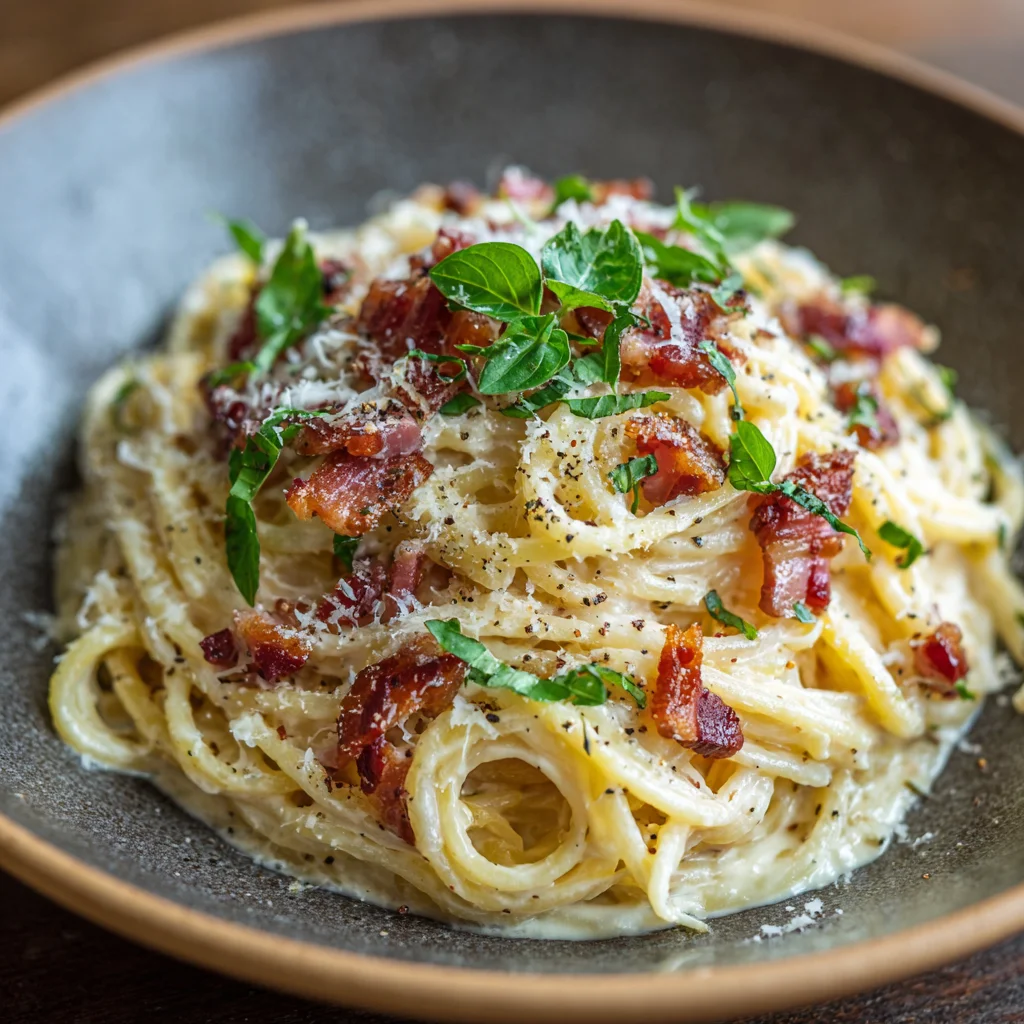
Pasta Carbonara is one of the most iconic Italian dishes, combining the perfect balance of creamy sauce, crispy guanciale, and spaghetti. While it sounds fancy, the dish is surprisingly easy to make at home, making it a favorite among food lovers worldwide. It’s the ideal comfort food, whether for a weeknight dinner or a special occasion.
If you’ve ever tried to make Carbonara and wondered how to get the perfect creamy sauce, you’re in the right place! In this article, we’ll break down how to make this dish step-by-step, with tips to ensure it comes out perfectly every time. Plus, we’ll also cover storage instructions, a nutrition breakdown, and answer common questions to help you along the way.
💖 Why You’ll Love This Recipe
- It is fast. You can make it in just 30 minutes.
- Simple items. You only need a few basic things from the store.
- Very filling. It is the perfect comfort food for cold nights.
- Family friendly. Kids and adults both love the creamy cheese taste.
Ingredients:
| Ingredient | Amount | Notes |
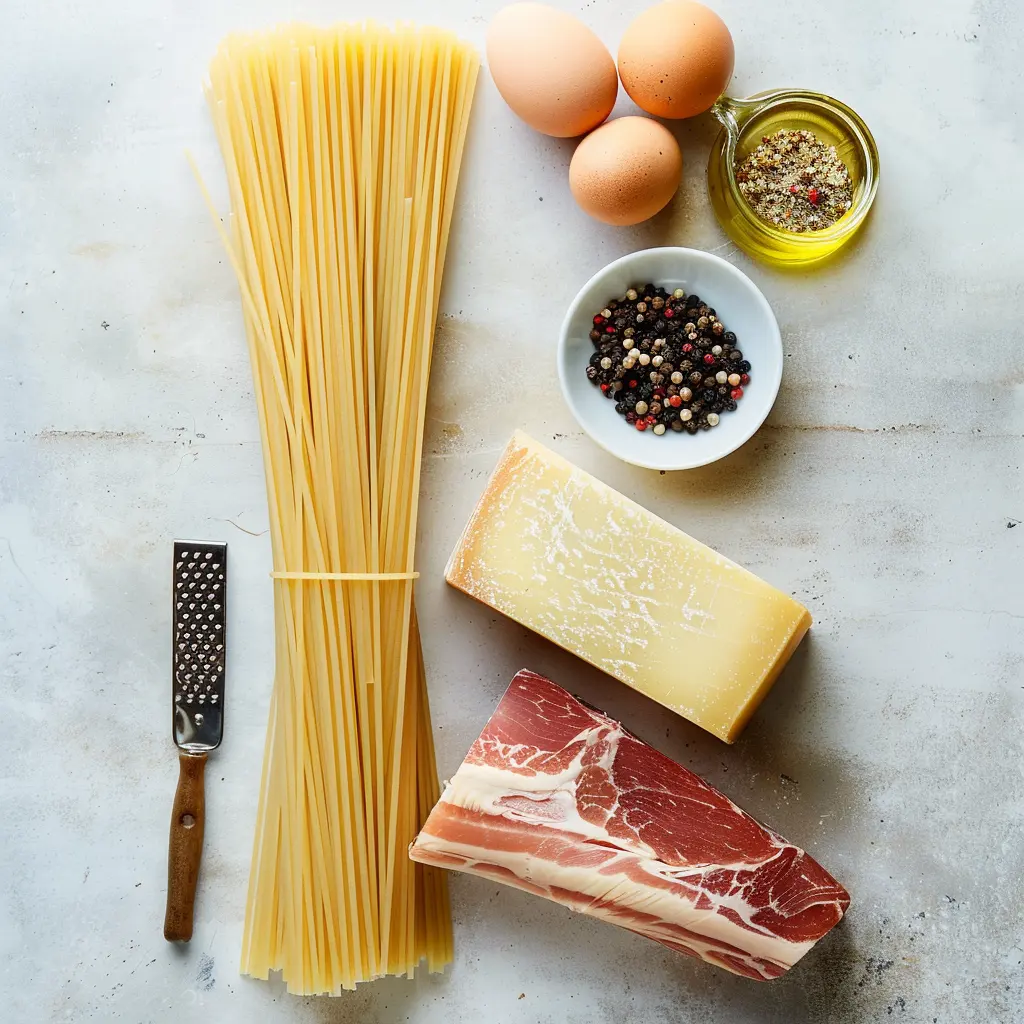
| Spaghetti (or your favorite pasta) | 12 oz (340g) | Long noodles work best. |
| Large eggs | 2 | Leave them at room temperature. |
| Pecorino Romano cheese | 1 ½ cups | Finely grated is best. |
| Guanciale (or pancetta) | 4 oz | Diced into small pieces. |
| Black pepper | To taste | Freshly cracked gives the most flavor. |
| Olive oil | 2 tablespoons | For cooking the meat. |
| Salt | A big pinch | Just for the boiling pasta water. |
👩🍳 Step-by-Step Instruction Guide
Follow these easy steps to make your meal.
1. Cook the Pasta
Fill a large pot with water. Add a big pinch of salt. Bring it to a boil. Add your spaghetti. Cook it following the package directions. You want it to be firm to the bite. Before you drain the water, scoop out one cup of the hot pasta water. Save it for later. Then drain the rest.
2. Prepare the Meat
Put your large skillet on the stove. Turn the heat to medium. Add the olive oil. Put the diced guanciale in the pan. Cook it for about 5 to 7 minutes. It should get crispy and golden. Try not to burn it! Take the pan off the stove. Set it aside.
3. Mix the Egg and Cheese
Get a large mixing bowl. Put the eggs and grated cheese inside. Whisk them together. Keep stirring until it looks smooth. Add some black pepper. The mix should be thick but easy to pour.
4. Combine Pasta and Meat
Put the hot noodles into the skillet with the crispy meat. Mix it well. The noodles will soak up the tasty meat fat. The hot noodles will also cool down just a tiny bit.
5. Make the Creamy Sauce
Don’t skip the storage trick — it’s at the end of the post. Now, pour the egg mix over the hot noodles. Stir it very quickly. The heat from the noodles will cook the eggs slowly. This turns into a smooth sauce. If the sauce looks too thick, pour in a tiny bit of the saved pasta water. Stir it again. Keep doing this until it looks perfect.

📝 Recipe Notes
| Note Type | Details |
| Meat Choices | Guanciale is the classic meat. Pancetta or bacon work too if you cannot find it. |
| Mixing Rule | You must toss the eggs quickly. If you stop moving the pasta, the eggs will scramble. |
| Flavor Adjustments | Add more cheese or pepper if you like a stronger taste. |
Time and Serving:
| Details | Time / Amount |
| Preparation Time | 10 minutes |
| Cooking Time | 20 minutes |
| Total Time | 30 minutes |
| Serving Size | Serves 4 people |
Storage Instructions:
- Refrigeration: Pasta Carbonara is best enjoyed immediately, but if you have leftovers, store them in an airtight container in the fridge for up to 2 days. Keep in mind that the sauce will thicken as it sits, but you can add a bit of reserved pasta water when reheating to restore its creaminess.
- Freezing: Freezing Carbonara is not recommended due to the creamy sauce, which may separate upon thawing. However, you can freeze the pasta (without the sauce) and reheat it with a freshly made sauce.
- Reheating: To reheat, warm up the leftovers in a skillet over low heat, adding a splash of pasta water or cream to bring the sauce back to its smooth texture.

Nutritional Breakdown (Per Serving):
- Calories: 500 kcal
- Protein: 22g
- Carbohydrates: 50g
- Fat: 22g
- Fiber: 3g
- Sodium: 800mg
- Sugar: 2g
(Note: These values are approximate and can vary based on specific ingredients used.)
Extra Tips to Make the Recipe Perfect:
- Salt the Pasta Water: Don’t skip salting the pasta water—it’s your only chance to season the pasta itself.
- Room Temperature Eggs: Using room temperature eggs helps create a smoother, creamier sauce when mixed with the pasta.
- Toss Quickly: Once you pour the egg mixture over the pasta, toss it quickly to avoid scrambling the eggs. You want the residual heat from the pasta to cook the eggs gently.
🥗 Serving Suggestions
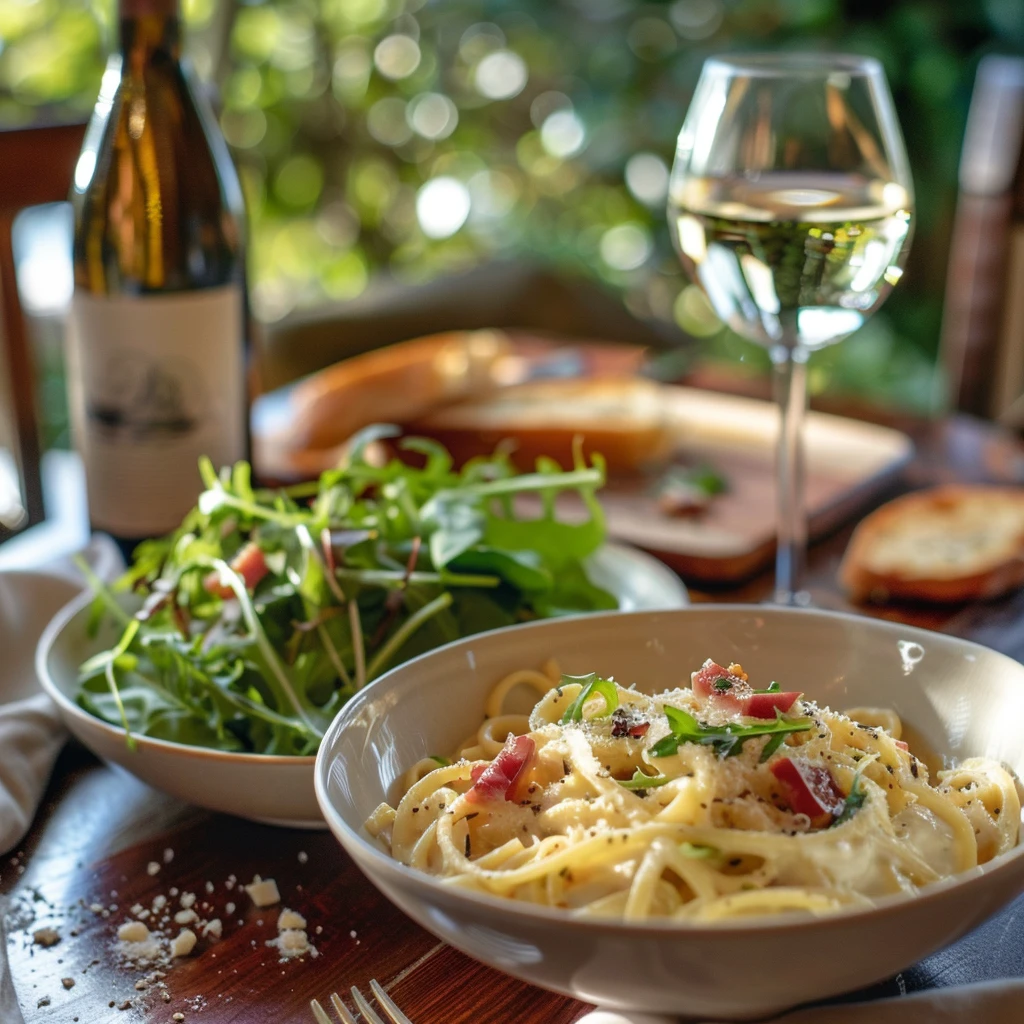
You should eat this meal right away while it is hot. I like to serve it with a fresh green salad. The crunchy lettuce balances the heavy cheese. Warm garlic bread is also a great side dish. You can use the bread to scoop up the extra sauce on your plate. If you drink wine, a light white wine tastes very good with this.
Kitchen Tools Needed:
- Large pot for boiling pasta
- Large skillet for cooking guanciale
- Whisk for making the egg mixture
- Tongs or pasta spoon for tossing pasta and sauce
- Cheese grater for freshly grated pecorino Romano
Frequently Asked Questions (FAQs):
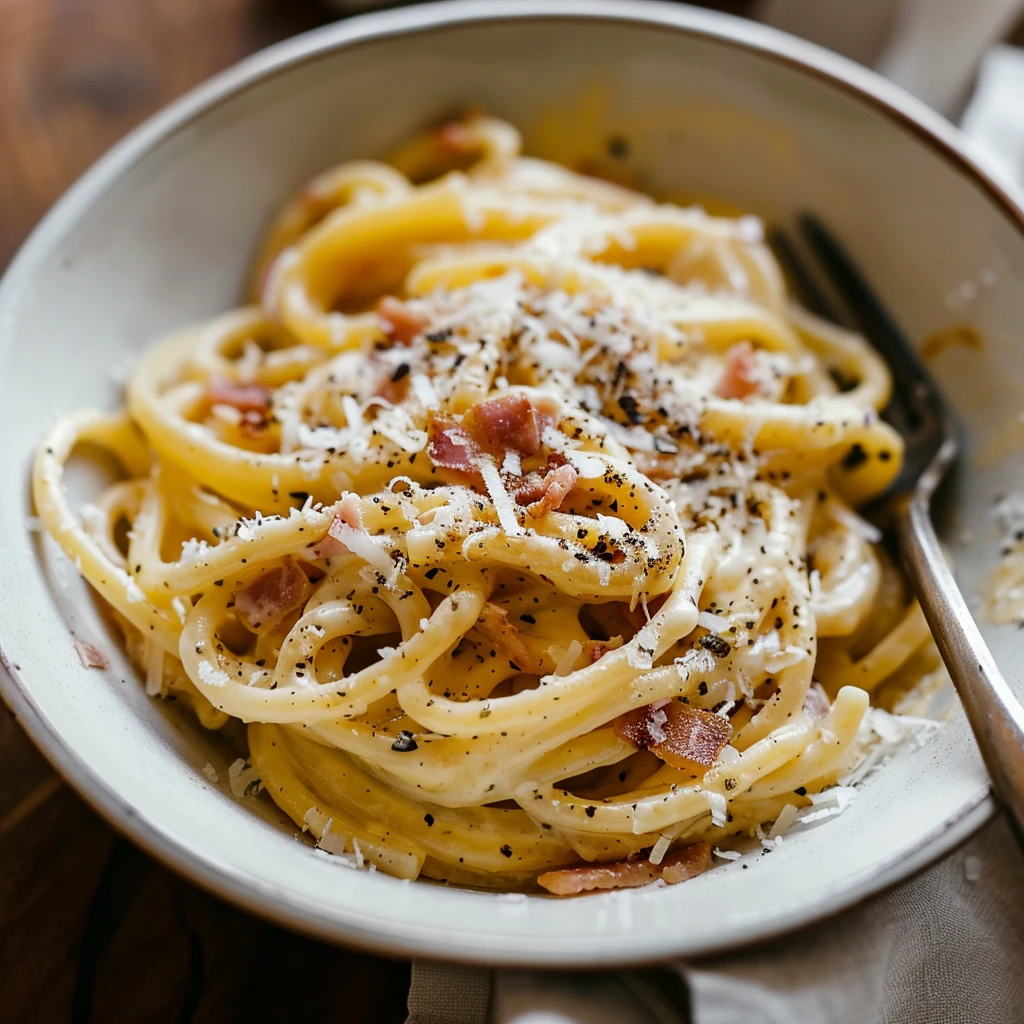
💭 Final Thoughts
Making this classic dish at home is much easier than people think. It just takes a little practice with the egg mixture. I hope you try it soon. Your whole family will love the rich and salty flavor. Take your time and enjoy the cooking process. I think perhaps the hardest part is not eating all the crispy meat before the noodles are done!