
Curry Chicken Salad Recipe: Bold, Creamy, and Absolutely Irresistible
Introduction
Chicken salad is one of those dishes that most people think they already know — creamy, mild, predictable, and perfectly pleasant without ever being genuinely exciting. Curry chicken salad challenges that assumption completely. It takes the familiar comfort of a classic chicken salad and transforms it into something vibrant, complex, and deeply memorable by introducing a warmly spiced curry dressing that works in remarkable harmony with sweet fruit, crunchy nuts, and tender chicken to produce a dish that surprises and satisfies in equal measure.
The origins of curry chicken salad trace back to a distinctly British-American culinary tradition that began gaining widespread popularity in the mid-twentieth century, when the influence of Indian spices on Western cooking started to make itself felt in home kitchens across both countries. The combination of curry powder with mayonnaise was initially considered unconventional, but it quickly proved itself to be one of those flavor marriages that feels both unexpected and somehow inevitable once you taste it — the richness of the mayonnaise softening the assertiveness of the curry, the sweetness of the raisins or dried fruit balancing the savory depth of the spices, and the crunch of toasted nuts adding textural contrast that keeps every forkful interesting from start to finish.
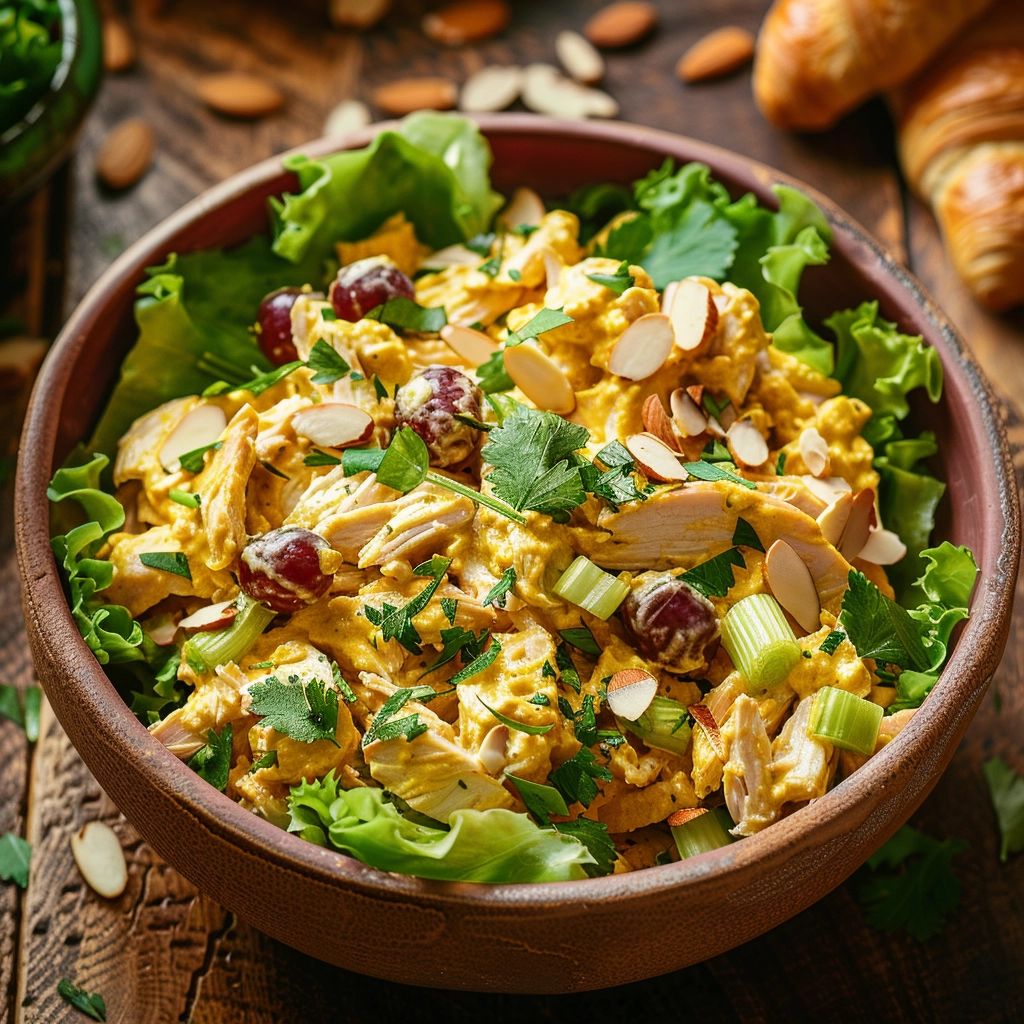
What makes this particular recipe stand out is the attention paid to building the dressing as a complete, balanced sauce before it ever touches the chicken. The curry powder is briefly bloomed in a small amount of warm oil to activate its fat-soluble flavor compounds before being whisked into the mayonnaise base — a technique borrowed from proper curry cooking that transforms the dressing from simply curry-flavored into something genuinely aromatic and deep. The result is a chicken salad that tastes like it came from a restaurant kitchen rather than a quick assembly at a home counter, and that earns enthusiastic requests for the recipe from virtually everyone who tries it.
Prep Time, Cook Time & Calories at a Glance
| Detail | Information |
|---|---|
| Prep Time | 15 minutes |
| Cook Time | 0 minutes (with pre-cooked chicken) |
| Chill Time | 30 minutes (recommended) |
| Total Time | 15 minutes (plus optional chilling) |
| Servings | 4 |
| Calories per Serving | 340–390 kcal |
| Protein per Serving | 28–32g |
| Carbohydrates | 18–22g |
| Fat | 18–24g |
| Sodium | 480–560mg |
Calorie estimates vary based on the fat content of the mayonnaise used, the quantity of almonds included, and whether additional sweet elements like mango chutney are incorporated.
Ingredients
For the Chicken Salad Base:
- 3 cups cooked chicken, shredded or diced (rotisserie chicken works perfectly)
- 2 stalks celery, finely diced
- ¼ cup red onion, finely diced
- ½ cup golden raisins or regular raisins
- ⅓ cup toasted slivered almonds or roughly chopped cashews
- 2 green onions, thinly sliced
- ¼ cup fresh cilantro or flat-leaf parsley, roughly chopped (optional)
- ½ cup red or green seedless grapes, halved (optional but recommended)
For the Curry Dressing:
- ¾ cup full-fat mayonnaise
- 2 tablespoons plain Greek yogurt or sour cream
- 1½ tablespoons good quality curry powder
- 1 tablespoon fresh lemon juice
- 1 tablespoon honey or mango chutney
- 1 teaspoon neutral oil (for blooming the curry powder)
- ½ teaspoon ground turmeric
- ½ teaspoon garlic powder
- ¼ teaspoon ground cumin
- ¼ teaspoon ground ginger or 1 teaspoon freshly grated ginger
- ¼ teaspoon salt
- Pinch of cayenne pepper (optional for heat)
- Freshly cracked black pepper to taste
Optional Add-Ins:
- ½ cup diced fresh mango for tropical sweetness
- ¼ cup dried cranberries in place of raisins
- 1 tablespoon apple cider vinegar for extra tanginess
- ¼ cup diced apple for crunch and freshness
Step-by-Step Instructions
Step 1 — Bloom the Curry Powder This single step is what separates a truly outstanding curry chicken salad dressing from an ordinary one and it takes less than two minutes to complete. Heat the teaspoon of neutral oil in a very small skillet or saucepan over medium-low heat until it shimmers. Add the curry powder and ground turmeric directly to the warm oil and stir continuously for thirty to forty-five seconds. The spices will darken very slightly, become intensely fragrant, and release their essential oils into the surrounding fat — a process that activates the fat-soluble flavor compounds in the spices and dramatically deepens their overall character and aroma. Remove from heat immediately and allow the bloomed spice mixture to cool for two to three minutes before adding it to the mayonnaise base. The kitchen should smell deeply aromatic and inviting at this point, which is a reliable confirmation that the blooming process has been successful.
Step 2 — Build the Curry Dressing In a medium mixing bowl, combine the mayonnaise and Greek yogurt or sour cream and whisk until completely smooth. Add the cooled bloomed curry and turmeric mixture, scraping every last drop of the spiced oil from the pan into the bowl — all of that flavored oil carries concentrated flavor that should not be left behind. Add the fresh lemon juice, honey or mango chutney, garlic powder, ground cumin, ground ginger, salt, cayenne if using, and several cracks of freshly ground black pepper. Whisk everything together thoroughly until the dressing is completely smooth, uniformly golden in color, and well seasoned throughout. Taste the dressing carefully at this stage — it should be creamy, warmly spiced, slightly sweet, and bright with lemon. Adjust any element to your personal preference before the dressing touches the chicken, as the flavors will mellow slightly once combined with the other components.
Step 3 — Prepare the Chicken If using rotisserie chicken, remove the skin and pull the meat from the bones by hand, shredding it into generous, irregular pieces rather than cutting it into uniform cubes. Irregular shredding creates more surface area for the dressing to cling to and produces a more interesting texture throughout the salad than uniform cubes would deliver. If using poached or baked chicken breasts, allow them to cool completely before shredding or dicing — warm chicken will partially melt the mayonnaise-based dressing and produce a greasy, broken consistency rather than the thick, creamy coating that makes this salad so appealing. The chicken should be at room temperature or slightly chilled before it is combined with the dressing.
Step 4 — Toast the Almonds If your almonds are not already toasted, place them in a dry skillet over medium heat and toast for two to three minutes, stirring or shaking the pan frequently, until they are golden, fragrant, and lightly browned at the edges. Watch them attentively — nuts go from perfectly toasted to burned very quickly and burned almonds will impart a bitter taste to the entire salad. Transfer the toasted almonds immediately to a plate to cool — they will continue to darken slightly from residual heat if left in the hot pan. Properly toasted almonds add a nutty depth and satisfying crunch to the finished salad that raw almonds simply cannot replicate.
Step 5 — Combine Everything Add the shredded chicken, diced celery, diced red onion, golden raisins, sliced green onions, and halved grapes if using to a large mixing bowl. Pour the prepared curry dressing over the top and fold everything together gently but thoroughly using a large spoon or rubber spatula until every component is evenly coated in the golden dressing. Add the toasted almonds and fold them in last to preserve as much of their crunch as possible — almonds that are stirred in too early and then sit in the dressing for an extended period before serving will lose their texture and become soft and less enjoyable. If including fresh cilantro or parsley, fold it in at this stage as well.
Step 6 — Chill and Rest Cover the assembled salad with plastic wrap or transfer to a sealed container and refrigerate for at least thirty minutes before serving. This chilling period serves two important purposes. It allows the flavors from the curry dressing to penetrate the chicken and other components more deeply, producing a more cohesive and integrated flavor in the finished dish than one served immediately after mixing. And it brings the salad to a properly cold serving temperature that makes it refreshing and appetizing rather than lukewarm and flat. The salad can be prepared up to twenty-four hours in advance with excellent results — the flavor is often at its absolute peak after an overnight rest in the refrigerator.
Step 7 — Taste, Adjust, and Serve Remove the salad from the refrigerator and give it a thorough stir. Taste once more and make any final adjustments — a small squeeze of additional lemon juice brightens the overall flavor if it has become slightly flat during chilling, an extra drizzle of honey adds sweetness if the curry flavor feels too assertive, and a pinch of salt sharpens everything if the seasoning has dulled. Serve immediately in your chosen format with your preferred accompaniments.
Serving Suggestions
In a Sandwich or Wrap: Spoon generous portions of curry chicken salad onto thick slices of toasted sourdough, between halves of a soft brioche bun, or rolled inside a large flour tortilla with crisp lettuce and thin cucumber slices. The warm curry flavor pairs beautifully with the neutral backdrop of bread and the crunch of fresh lettuce, and this format makes the salad portable and convenient for packed lunches and picnics.
On a Bed of Greens: Serve a generous scoop of the curry chicken salad over a bed of mixed greens, baby spinach, or arugula for a light, complete meal that feels fresh and nutritionally balanced. The peppery bite of arugula in particular works beautifully against the sweet, spiced curry dressing and creates a more complex overall flavor than milder greens would produce.
With Crackers or Crostini: Serve the curry chicken salad as an appetizer or party snack by spooning small portions onto butter crackers, toasted crostini, or endive leaves for an elegant passed appetizer that takes almost no effort to prepare yet always generates enthusiastic responses from guests. This presentation works particularly well for cocktail parties and informal gatherings.
Stuffed in Avocado Halves: Halve and pit two ripe avocados and fill each cavity generously with the curry chicken salad for an elegant, nutritious serving presentation that requires no bread or crackers. The creamy, buttery avocado pairs exceptionally well with the spiced curry dressing and the combination of textures — smooth avocado against the chunky, crunchy salad filling — is genuinely outstanding in every bite.
Creative Variations
Mango Curry Chicken Salad: Add one cup of diced fresh ripe mango to the salad along with the other components. The mango introduces a juicy, tropical sweetness that complements the curry spices in a way that feels entirely natural and adds a beautiful golden color throughout the bowl that makes the finished salad look as vibrant as it tastes.
Thai-Inspired Version: Replace the curry powder with one tablespoon of Thai red curry paste bloomed in the oil instead, swap the raisins for dried mango pieces, replace the almonds with roughly chopped roasted peanuts, add a tablespoon of fish sauce to the dressing alongside the soy sauce, and finish with fresh Thai basil leaves. This version leans fully into Southeast Asian flavor territory and produces a completely different but equally exciting result.
Apple Walnut Curry Salad: Replace the grapes with one cup of finely diced crisp apple — Granny Smith for tartness or Honeycrisp for balanced sweetness — and swap the slivered almonds for roughly chopped toasted walnuts. The apple provides a juicy, fresh crunch and a mild tartness that balances the richness of the curry dressing beautifully while the walnuts add an earthy depth that pairs particularly well with the spice blend.
Lighter Greek Yogurt Version: Replace the mayonnaise entirely with full-fat plain Greek yogurt for a considerably lighter dressing that is higher in protein and lower in fat than the mayonnaise-based original. The yogurt produces a tangier, slightly thinner dressing that some people prefer for its freshness, and the higher protein content makes the salad an even more nutritionally complete meal without any sacrifice in flavor.
Storage Instructions
Store the curry chicken salad in an airtight container in the refrigerator for up to three days. The flavor genuinely improves over the first twenty-four hours as the curry dressing continues to meld with the chicken and other components, making this an excellent dish to prepare a full day ahead of serving. Stir the salad before each serving as the dressing may settle slightly during storage. The toasted almonds will soften progressively the longer they sit in the dressing — if maximum crunch is important to you, store the toasted almonds separately and fold them into individual portions just before serving rather than into the entire batch at once. Do not freeze this salad as the mayonnaise-based dressing separates upon thawing and the vegetables lose their texture entirely.
Notes
- Always bloom the curry powder before using: The single most important technique in this recipe is the brief blooming of the curry powder in warm oil before adding it to the mayonnaise. Raw curry powder stirred directly into a cold mayonnaise dressing produces a flat, slightly dusty flavor that never fully integrates into the other components. Bloomed curry powder produces a dressing with a rounded, aromatic depth that tastes genuinely cooked and considered rather than simply assembled — the difference is immediately apparent and consistently worth the extra two minutes the technique requires.
- Use good quality curry powder for best results: The quality of the curry powder used in this recipe has a direct and significant impact on the flavor of the finished dish in a way that most other spices do not. A fresh, high-quality curry powder from a well-stocked spice shop or the international aisle of a good grocery store will produce a dramatically more complex, aromatic, and satisfying dressing than a jar of generic supermarket curry powder that has been sitting on the shelf for eighteen months. If the curry powder in your pantry has lost its vibrant color and no longer smells strongly aromatic when opened, replace it before making this recipe.
- Balance the sweetness carefully: The sweet elements in this salad — raisins, grapes, honey or chutney — are essential counterpoints to the savory depth of the curry and the richness of the mayonnaise, but the balance between sweet and savory is the most delicate calibration in the entire recipe. Start with the stated quantities, taste the finished dressing before adding the chicken, and adjust the honey or chutney quantity by small increments rather than large additions. A salad that is too sweet loses the savory curry character that makes it interesting, while one that is not sweet enough tastes one-dimensional and overly heavy.
Frequently Asked Questions (FAQs)
Q1. What is the best type of chicken to use for curry chicken salad?
Rotisserie chicken is the most practical and consistently excellent choice for this recipe — it is already cooked, deeply flavored from the rotisserie process, and available at virtually every grocery store at a reasonable price. Simply pull the meat from the bones by hand and shred it into the salad. Poached chicken breasts are an excellent alternative that produces a cleaner, more neutral flavor that allows the curry dressing to dominate more completely. Leftover baked or grilled chicken also works beautifully and is an excellent way to use up chicken that might otherwise go to waste during the week.
Q2. Can I make this salad less spicy for children or sensitive palates?
Yes, easily. Reduce the curry powder to one teaspoon rather than one and a half tablespoons and omit the cayenne pepper entirely. The resulting dressing will be very mildly spiced with a warm, slightly exotic flavor that most children find appealing rather than challenging. You can also increase the honey slightly to add more sweetness, which further softens the perception of spice and makes the overall flavor profile more approachable for palates that are not accustomed to curry seasoning.
Q3. How far in advance can I make curry chicken salad?
This salad can be made up to twenty-four hours in advance and stored covered in the refrigerator, and many people find the flavor is actually at its best after a full overnight rest when all of the components have had time to meld completely. For gatherings or meal prep, this make-ahead quality is one of the recipe’s greatest practical advantages. Store the toasted almonds separately and add them just before serving to preserve their crunch if the texture contrast is important to your enjoyment of the dish.
Q4. What can I substitute for mayonnaise to make this healthier?
Full-fat plain Greek yogurt is the most effective direct substitute — it provides comparable creaminess with significantly less fat and more protein than mayonnaise, and its natural tanginess works beautifully with the curry spices and lemon juice in the dressing. A half-and-half blend of Greek yogurt and light mayonnaise is a popular middle-ground option that preserves more of the classic richness while reducing the overall calorie count meaningfully. Mashed ripe avocado can also replace a portion of the mayonnaise for a dairy-free alternative that adds healthy fats and a subtle creaminess of its own.
Conclusion
Curry chicken salad is the dish that permanently changes how you think about chicken salad — proving through one boldly spiced, creamy, texturally rich bowl that this category of food is capable of far more complexity and excitement than its reputation suggests, and delivering a recipe so quick to make, so easy to customize, and so consistently impressive to everyone who tastes it that it earns an immediate and permanent place in any home cook’s most reliable weekday repertoire.


