
Mexican Chicken Casserole: The Ultimate Weeknight Dinner That Tastes Like a Fiesta
Every home cook has that one dish — the recipe that never fails, that everyone at the table devours without complaint, that fills the kitchen with an aroma so inviting it pulls people in from the other room. For millions of households, Mexican Chicken Casserole is exactly that dish. It is the weeknight hero, the potluck champion, the freezer meal that saves the day, and the comfort food that delivers genuine excitement on even the most ordinary Tuesday evening.
What separates Mexican Chicken Casserole from standard casserole fare is the extraordinary depth and vibrancy of its flavor. While a classic chicken casserole might rely on cream of mushroom soup and a handful of herbs for seasoning, the Mexican version draws from one of the world’s most expressive culinary traditions — a tradition that understands better than almost any other how to layer spice upon spice, how to balance richness with brightness, and how to coax maximum flavor from simple, affordable ingredients.
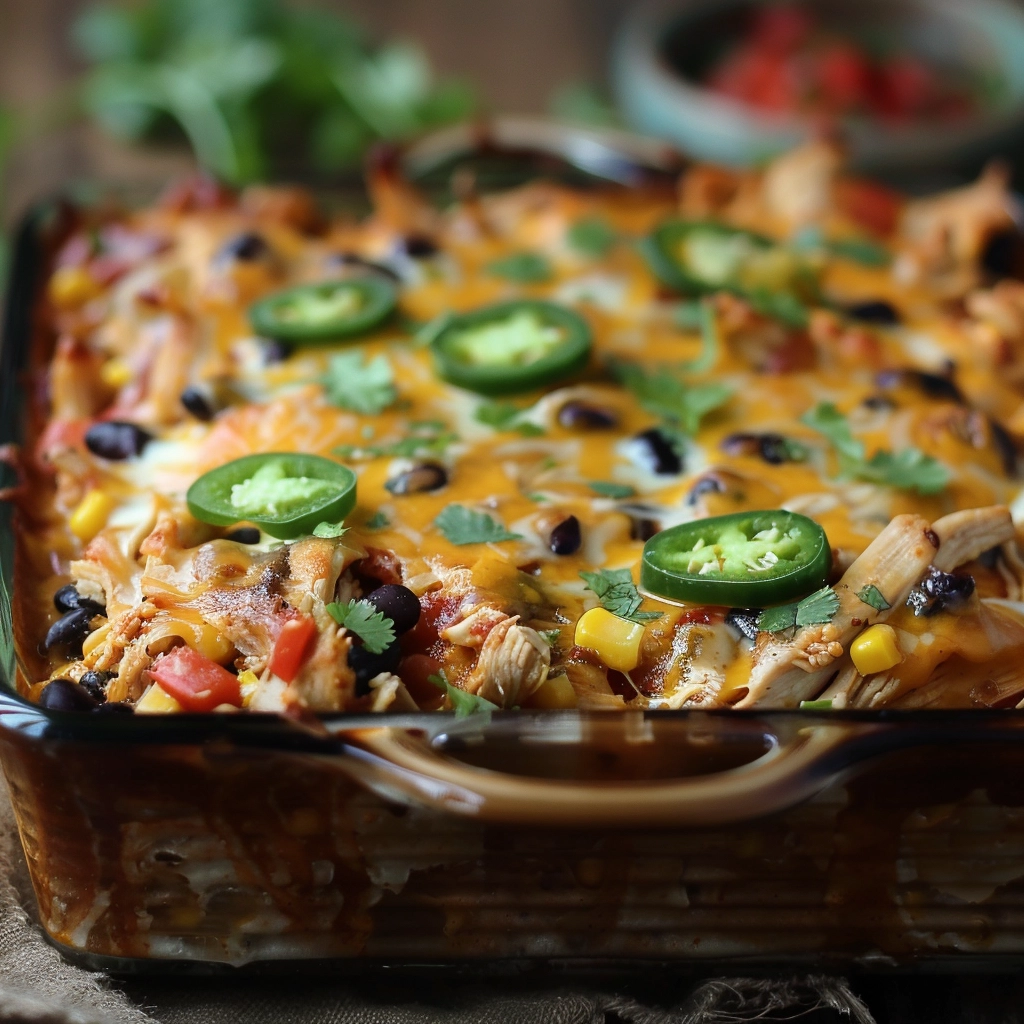
This is a dish built on honest, satisfying food. Tender pulled chicken soaked in a bold enchilada sauce. Creamy beans and sweet roasted corn providing heartiness and color. Melted cheese forming a golden, bubbling crust across the top. Fresh cilantro, cool sour cream, and a squeeze of lime transforming a humble baked dish into something that tastes genuinely festive. It is the kind of meal that makes everyone feel like they are being taken care of — and that is the highest compliment any home-cooked dish can receive.
In this article, every aspect of this beloved recipe is explored in full — from ingredient selection and preparation techniques to the step-by-step cooking process, expert advice, serving inspiration, delicious variations, nutritional value, and a detailed FAQ section that answers every question before you even think to ask it.
The Philosophy Behind Mexican Chicken Casserole
Great casserole cooking is fundamentally an exercise in patience and layering. Unlike a quick stir-fry or a simple sauté, a casserole develops its flavor through the slow, even heat of the oven — allowing sauces to penetrate proteins, spices to bloom and meld, and the separate components of a dish to gradually surrender their individual identities and become something unified and deeply flavorful.
Mexican Chicken Casserole applies this principle to one of the world’s most exciting flavor traditions. It takes the foundational elements of Mexican cooking — dried chile-based sauces, aromatic spice blends, earthy legumes, sweet corn, fresh herbs, and melted cheese — and assembles them in a baking dish where thirty-five minutes of heat transforms them into something that tastes as if it simmered for hours.
The result is a dish that honors its culinary heritage while being completely practical for the modern home kitchen. It requires no special equipment beyond a baking dish and a mixing bowl. It uses ingredients available at virtually every supermarket. It can be assembled in twenty minutes and it serves a crowd without breaking the bank. And it produces leftovers that, if anything, taste better the following day as the flavors continue to develop overnight in the refrigerator.
Understanding the Building Blocks
Choosing the Right Chicken
The chicken in this casserole provides the primary protein foundation and carries the flavors of the sauce throughout the dish. The way it is prepared before entering the casserole significantly affects the final result.
Poached chicken simmered gently in seasoned broth — with garlic, onion, bay leaves, cumin, and salt — produces extraordinarily tender, moist shredded meat with flavor built in from the very beginning. Allow the chicken to cool in its own broth before shredding for maximum moisture retention.
Oven-roasted chicken thighs seasoned with a dry rub of cumin, chili powder, garlic powder, and smoked paprika develop a beautifully caramelized exterior during roasting. Once shredded, the slightly crisped, spiced edges distribute throughout the casserole and add a dimension of flavor that plain poached chicken cannot match.
Slow-cooked chicken prepared in a slow cooker with onion, garlic, chicken broth, and Mexican spices for six to eight hours produces exceptionally tender, deeply flavored pulled chicken that falls apart at the touch. This is the richest and most flavorful approach when time permits.
Store-bought rotisserie chicken is the most practical shortcut and should not be dismissed as a lesser option. A quality rotisserie chicken provides well-seasoned, juicy meat that takes minutes to shred and contributes genuine flavor to the finished casserole.
In all cases, the chicken should be shredded into substantial, irregular pieces. Uniform dicing produces a different texture that can make the casserole feel disconnected. Shredded chicken binds with the sauce and other components during baking to create the cohesive, scoopable consistency that defines a great casserole.
Building the Sauce
The sauce is the thread that connects every component of the casserole into a coherent whole. It must be bold enough to season the rice, the beans, and the chicken simultaneously while remaining balanced and not overwhelmingly spicy or acidic.
The most effective sauce base combines red enchilada sauce for its deep chile character, cream cheese or sour cream for richness and body, salsa for fresh tomato and aromatic complexity, and a carefully measured spice blend that reinforces and amplifies all the other flavors.
The Signature Sauce:
- 1 can (10 oz) red enchilada sauce
- 4 oz cream cheese, softened and cubed
- ½ cup sour cream
- ¼ cup medium salsa
- 2 tablespoons chicken broth
- 1½ teaspoons cumin
- 1 teaspoon chili powder
- 1 teaspoon garlic powder
- ½ teaspoon smoked paprika
- ½ teaspoon dried oregano
The cream cheese in this version — rather than sour cream alone — creates a noticeably richer, more velvety sauce that coats every grain of rice and every piece of chicken in a way that a thinner sauce simply cannot replicate. Soften the cream cheese completely before combining to ensure a smooth, lump-free result.
The Vegetable and Grain Components
Long-grain white rice forms the starchy foundation. It should be cooked and cooled to room temperature before incorporating — hot freshly cooked rice continues absorbing liquid aggressively in the oven and can become gummy. Day-old rice from the refrigerator is actually ideal for this reason, which makes this casserole an excellent way to use leftover rice.
Black beans bring protein, fiber, and an earthy density that makes the casserole genuinely filling. Drain and rinse thoroughly to remove the excess sodium from the canning liquid.
Fire-roasted corn — either canned or frozen — introduces a caramelized sweetness and color that brightens the dish both visually and in terms of flavor. The fire-roasted variety has a slightly smoky, charred quality that plain canned corn lacks.
Roasted poblano peppers are an elevated ingredient choice that rewards the small effort of charring them under the broiler and peeling them. Their mild heat and rich, slightly smoky flavor contribute a depth that canned green chiles, while convenient and good, cannot fully replicate.
Red bell pepper adds sweetness, color, and a fresh vegetable element that balances the richness of the sauce and cheese.
The Cheese Strategy
The cheese topping of a great Mexican Chicken Casserole requires a strategy beyond simply scattering whatever is available over the top. A thoughtful approach produces a dramatically better result.
The first principle is using a combination of cheeses rather than a single variety. A Mexican four-cheese blend provides the most authentic flavor — typically containing cheddar, Monterey Jack, asadero, and queso quesadilla in proportions that balance melt, stretch, and flavor. Supplementing this with a layer of Oaxacan cheese — a stringy, mild, mozzarella-like Mexican cheese increasingly available in supermarkets — creates the spectacular stretchy pull when served that makes the casserole even more irresistible.
The second principle is generosity. Two to two and a half cups of cheese for a 9×13-inch dish is the correct quantity. A thin scattering of cheese produces a dry, unimpressive top. A thick, even blanket produces the golden, bubbling, slightly browned cheese crust that makes this dish visually spectacular and texturally outstanding.
The third principle is finishing with cotija after baking. Crumbling this firm, salty, aged Mexican cheese over the casserole immediately after it comes from the oven adds a completely different cheese dimension — crumbly, tangy, concentrated — that contrasts beautifully with the melted cheese beneath it.
Complete Step-by-Step Recipe
Prep Time: 20 minutes Cook Time: 45 minutes Total Time: 1 hour 5 minutes Servings: 6 to 8
Ingredients
Casserole filling:
- 4 cups shredded cooked chicken
- 2½ cups cooked long-grain white rice, cooled
- 1 can (15 oz) black beans, drained and rinsed
- 1 can (15 oz) fire-roasted corn, drained
- 1 can (10 oz) diced tomatoes with green chiles (Rotel), drained
- 1 red bell pepper, finely diced
- 3 green onions, thinly sliced
- ¼ cup fresh cilantro, roughly chopped
Sauce:
- 1 can (10 oz) red enchilada sauce
- 4 oz cream cheese, softened
- ½ cup sour cream
- ¼ cup medium salsa
- 2 tablespoons chicken broth
- 1½ teaspoons cumin
- 1 teaspoon chili powder
- 1 teaspoon garlic powder
- ½ teaspoon smoked paprika
- ½ teaspoon dried oregano
- Salt and black pepper to taste
Topping:
- 1½ cups Mexican four-cheese blend, shredded
- ½ cup Oaxacan cheese or mozzarella, shredded
- ¼ cup cotija cheese, crumbled (for after baking)
Garnishes:
- Fresh cilantro
- Sliced jalapeños (fresh or pickled)
- Sliced green onions
- Sour cream or Mexican crema
- Avocado slices or guacamole
- Lime wedges
- Crushed tortilla chips (optional, for texture)
Instructions
Step 1 — Prepare the oven and dish. Position an oven rack in the center of the oven and preheat to 375°F (190°C). Spray a 9×13-inch baking dish generously with non-stick cooking spray. A well-greased dish prevents sticking, simplifies serving, and makes cleanup considerably easier. Set the prepared dish aside on a heat-safe surface near your preparation area.
Step 2 — Prepare the cream cheese sauce. In a large mixing bowl, combine the softened cream cheese and sour cream. Beat with a fork or whisk until completely smooth with no lumps remaining — this is easiest when the cream cheese is fully at room temperature. Add the enchilada sauce, salsa, and chicken broth, whisking constantly until the mixture is uniform and silky. Add the cumin, chili powder, garlic powder, smoked paprika, dried oregano, salt, and black pepper. Whisk once more until the spices are fully incorporated. Taste the sauce critically — it should be bold, creamy, and well-seasoned. Adjust with additional salt or spice as needed.
Step 3 — Combine all filling ingredients. Add the shredded chicken, cooled rice, black beans, fire-roasted corn, drained Rotel tomatoes, diced red bell pepper, sliced green onions, and fresh cilantro to the sauce bowl. Using a large spoon or rubber spatula, fold everything together with deliberate, gentle strokes until every component is evenly distributed and thoroughly coated in the creamy sauce. The mixture should look colorful, vibrant, and well-combined with no dry pockets of rice or unsauced chicken visible.
Step 4 — Fill the baking dish. Transfer the filling mixture into the prepared baking dish. Spread into a completely even layer, pushing the mixture firmly into all four corners and smoothing the surface with the back of a spoon. An even, level surface ensures uniform heat distribution and consistent cooking throughout — areas that are thicker will take longer to heat through, potentially resulting in overcooked edges and an underheated center.
Step 5 — Apply the cheese topping. Scatter the shredded Oaxacan cheese or mozzarella across the filling as a first layer — this melts into a stretchy, gooey base layer beneath the more flavorful top cheese. Follow with the Mexican four-cheese blend, distributing it evenly and generously across the entire surface. Make sure the cheese layer reaches all the way to the edges of the dish — the edges tend to cook faster and benefit from the moisture protection the cheese provides.
Step 6 — Bake the casserole. Cover the baking dish tightly with aluminum foil, sealing the edges firmly to trap steam inside. Place in the preheated oven and bake covered for 25 minutes. The covered period allows the filling to heat through completely and the steam to keep the rice moist and the sauce from evaporating too rapidly. After 25 minutes, carefully peel back and remove the foil — steam will escape, so handle with oven mitts and tilt the foil away from you. Return the uncovered dish to the oven for a further 15 to 20 minutes until the cheese is completely melted, actively bubbling, and developing attractive golden-brown spots across the surface. The edges of the casserole should be visibly bubbling and the cheese should have a slight chew when touched lightly with a spoon.
Step 7 — Rest and add finishing touches. Remove the casserole from the oven and place on a wire rack or heat-safe trivet. Allow to rest uncovered for 8 to 10 minutes — this resting period is genuinely important. The sauce thickens slightly as it cools just enough to hold together when scooped. The temperature drops from scalding to perfectly hot and ready to eat. The flavors settle and become more cohesive. While the casserole rests, crumble the cotija cheese evenly over the top for a final, salty, tangy finish.
Step 8 — Garnish and bring to the table. Scatter fresh cilantro and sliced green onions across the top of the casserole. Arrange jalapeño slices decoratively if desired. Bring the baking dish directly to the table alongside small bowls of sour cream, avocado or guacamole, lime wedges, and crushed tortilla chips. Allowing diners to add their own garnishes makes the serving experience interactive and ensures everyone gets exactly what they enjoy most.
Tips That Make the Difference
Build flavor into the chicken before it enters the casserole. Season the chicken aggressively during cooking — whether poaching, roasting, or using a slow cooker. Bland chicken cannot be fully rescued by even the most flavorful sauce. The best casseroles start with chicken that already has character before a single drop of enchilada sauce touches it.
The cream cheese must be fully softened. Cold cream cheese does not blend smoothly into the sauce and creates visible white lumps throughout the dish that never fully disappear during baking. Remove cream cheese from the refrigerator at least an hour before starting — or soften briefly in the microwave at very low power for 15-second intervals until genuinely pliable.
Rotel tomatoes are a secret weapon. The combination of diced tomatoes and green chiles in a single can — Rotel being the most widely known brand — contributes a complex, layered flavor that plain diced tomatoes cannot match. The mild heat and tang of the green chiles combined with the sweetness of the tomatoes create a flavor synergy that elevates the entire sauce.
Do not crowd the cheese. Apply cheese in two deliberate layers rather than one thick pile. Two thin, even layers melt more uniformly and produce a more attractive, evenly golden top than a single thick application.
Test for doneness with a knife. Insert a butter knife into the center of the casserole and hold it there for five seconds. When withdrawn, it should feel hot to the touch. If it feels merely warm, the casserole needs more time despite the cheese appearing done. The cheese browns faster than the filling heats through — always verify the center temperature before serving.
Serving Ideas
Mexican Chicken Casserole possesses the rare quality of being a complete meal in itself while also pairing beautifully with a range of accompaniments that extend the meal without duplicating it.
Warm corn tortillas served alongside allow diners to scoop the casserole and eat it taco-style — a presentation that is particularly popular with children and makes the meal feel more interactive and festive. A bowl of freshly made pico de gallo provides a bright, fresh contrast to the rich, baked casserole. Its raw acidity cuts through the cheese and cream in a way that no cooked condiment can replicate.
A simple lime-dressed coleslaw with shredded cabbage, cilantro, and a honey-lime dressing provides a crunchy, refreshing counterpoint. Mexican-style rice as an additional side dish extends the meal significantly for particularly hungry gatherings. A large pitcher of agua fresca — hibiscus, tamarind, or lime cucumber — completes the Mexican-inspired table beautifully and provides a non-alcoholic option that feels appropriately celebratory.
Exciting Variations
White Chicken Mexican Casserole: Replace the red enchilada sauce entirely with salsa verde — a tomatillo-based green sauce that is tangier, brighter, and lighter than the red variety. Combine with sour cream, Monterey Jack cheese, diced white onion, and poblano peppers for a visually striking green-and-white casserole with a completely different but equally compelling flavor profile.
Mexican Chicken Tortilla Lasagna: Instead of rice, layer torn corn tortillas between the filling and cheese layers, creating a structure reminiscent of lasagna. Each tortilla layer softens during baking and absorbs the sauce, producing a dish with a satisfying starchy depth and a beautifully defined cross-section when served.
Creamy Jalapeño Chicken Casserole: Add two to three finely diced fresh jalapeños and an extra two ounces of cream cheese to the sauce for a spicier, even creamier version. Top with Pepper Jack instead of Mexican blend for additional heat throughout.
Black Bean and Quinoa Mexican Chicken Casserole: Replace the rice with cooked quinoa and double the black beans for a higher-protein, gluten-free, nutrient-dense variation. Quinoa absorbs the sauce beautifully and adds a pleasant, slightly nutty texture that pairs well with the bold Mexican spices.
Street Corn Mexican Chicken Casserole: Prepare an elote-inspired corn mixture — corn kernels, mayonnaise, cotija, chili powder, and lime juice — and layer it through the casserole filling for a version inspired by Mexican street corn with a richer, more complex corn element running throughout the dish.
Nutritional Breakdown
Mexican Chicken Casserole provides an impressively balanced nutritional profile that supports the claim that genuinely satisfying food and genuinely nutritious food can be the same thing.
A generous serving of approximately one and a half to two cups delivers 420 to 510 calories, 34 to 42 grams of complete protein from the chicken, beans, and cheese combined, 36 to 44 grams of complex carbohydrates from the rice and beans, and 14 to 18 grams of total fat primarily from the dairy components.
The black beans are a particular nutritional highlight — contributing seven to eight grams of dietary fiber per serving, plant-based protein, folate, manganese, and iron. Dietary fiber at this level supports sustained fullness, healthy digestion, and stable blood sugar levels. The chicken provides all essential amino acids alongside niacin, B6, phosphorus, and selenium. The tomatoes and peppers deliver vitamin C and lycopene. The cheese contributes calcium, phosphorus, and vitamin B12.
For those reducing calories, substituting full-fat sour cream and cream cheese with their low-fat counterparts reduces the fat content by approximately 30 percent without significantly affecting flavor or texture. Reducing the cheese topping to one cup and using a 50/50 mix of rice and cauliflower rice reduces both calories and carbohydrates further while maintaining the satisfying volume and texture of the finished dish.
Frequently Asked Questions
Q1. Can I prepare this casserole the night before and bake it the next day?
Yes — this is one of the best features of this recipe. Assemble the casserole completely, including the cheese topping, and cover tightly with plastic wrap followed by aluminum foil. Refrigerate for up to 24 hours. When ready to bake, remove from the refrigerator 30 minutes before putting it in the oven to reduce the cold start. Increase the covered baking time by 8 to 10 minutes to compensate for the cold starting temperature. The overnight rest actually improves the flavor as the spices permeate the filling more deeply.
Q2. How should I store and reheat leftovers?
Transfer leftovers to an airtight container or cover the baking dish tightly with foil or plastic wrap. Refrigerate for up to 4 days. To reheat, place individual portions in a microwave-safe bowl with a tablespoon of chicken broth or water, cover loosely, and heat on medium power in 60-second intervals until steaming hot. For reheating a larger portion, cover the dish with foil and warm in a 350°F (175°C) oven for 20 to 25 minutes. The broth addition prevents the rice from drying out during reheating.
Q3. Can this casserole be made completely dairy-free?
Yes. Replace the cream cheese with a dairy-free cream cheese alternative (widely available from brands like Violife and Kite Hill), substitute sour cream with a coconut-based or cashew-based dairy-free sour cream, and use a dairy-free shredded cheese blend for the topping. The flavor profile will be slightly different but still deeply satisfying and genuinely delicious. Ensure the enchilada sauce used is also dairy-free — most are, but always check the label.
Q4. My casserole came out watery — what went wrong?
A watery casserole almost always results from one of three causes. The first is insufficiently drained canned ingredients — beans, corn, and tomatoes should all be drained thoroughly and even patted dry where possible. The second is hot, freshly cooked rice that continues releasing starch and absorbing water aggressively in the oven. Always use cooled rice. The third is insufficient uncovered baking time — the final uncovered period is when excess moisture evaporates. Extend the uncovered baking time by five to eight minutes if the sauce still looks loose.
Q5. What is the difference between using cream cheese versus sour cream only in the sauce?
Cream cheese creates a noticeably thicker, richer, more stable sauce that holds its consistency throughout baking and does not separate when heated. Sour cream alone produces a thinner sauce that has a tendency to break slightly in the oven, resulting in a less cohesive texture. The cream cheese version also has a more velvety mouthfeel in the finished casserole. If cream cheese is unavailable, replace it with an equal quantity of full-fat Greek yogurt for a tangier but similarly thick sauce.
Q6. Can I make this casserole without beans?
Yes. Simply omit the beans and increase the rice and corn quantities slightly to maintain the filling volume. You can also substitute the beans with diced zucchini, additional chicken, or frozen edamame for comparable protein and texture without the legume element. The casserole remains completely satisfying and flavorful without beans — the character simply shifts slightly toward a lighter, less earthy profile.
Q7. Is this recipe suitable for children?
Yes, with minor adjustments for spice sensitivity. Use mild enchilada sauce, mild salsa, and omit the jalapeño garnish for a child-friendly version that retains all the warmth and flavor of the original without significant heat. The combination of familiar flavors — chicken, rice, corn, beans, and melted cheese — makes this casserole very popular with children. The interactive garnish presentation where each person customizes their own bowl also tends to engage younger diners positively.
Q8. How can I make this casserole spicier?
Several additions increase the heat level significantly. Adding two to three minced chipotle peppers in adobo sauce to the sauce base introduces a deeply smoky, moderately spicy heat with complexity. Stirring in one to two teaspoons of hot sauce — Valentina, Tapatío, or Cholula all work beautifully — elevates the background heat throughout. Using hot enchilada sauce and hot salsa as the base ingredients amplifies the chili heat from the very beginning. Diced fresh serranos in the filling provide clean, bright heat. Layering two or three of these approaches together creates a genuinely spicy casserole for those who enjoy serious heat.
Conclusion
Mexican Chicken Casserole earns its place in the home cook’s permanent repertoire through a combination of qualities that few dishes can simultaneously claim. It is fast enough for a weeknight but impressive enough for company. It is affordable enough for everyday cooking but flavorful enough to feel like a genuine treat. It is simple enough for cooks of any experience level but complex enough in flavor to satisfy the most discerning palate at the table.
The bold, layered Mexican spice profile — the cumin, chili, paprika, and garlic working in concert with the enchilada sauce, cream cheese, and fresh salsa — elevates a humble collection of pantry staples into something that tastes genuinely extraordinary. The bubbling, golden cheese top, the colorful filling visible at the edges of the dish, and the cloud of fragrant steam that rises when the first spoon breaks through the surface — these are the moments that make cooking for others one of the most rewarding things a person can do.
Make this casserole once and it will immediately become a fixture in your household. Not because recipes demand repetition, but because food this reliably delicious and this genuinely satisfying earns the kind of loyalty that only comes from repeatedly delivering exactly what it promises — a bold, warming, deeply satisfying meal that makes the entire table happy from the very first bite.


