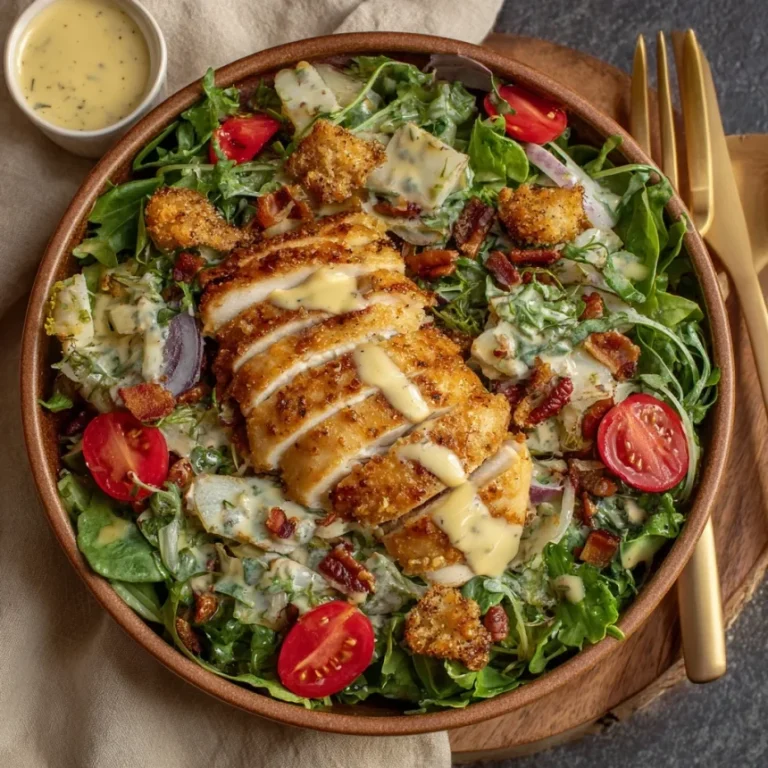
Honey Mustard Chicken Salad: The Sweet, Tangy, and Utterly Satisfying Recipe You Need to Know
There are flavor combinations in cooking that feel inevitable — pairings so perfectly matched that it seems as though nature intended them to exist together. Honey and mustard is one of those combinations. The sweetness of honey softening the sharp, tangy punch of mustard, the two flavors weaving together into something that is neither fully sweet nor fully sharp but instead something more interesting, more balanced, and more craveable than either could be alone. Apply this combination to a well-made chicken salad and the result is a dish that is genuinely difficult to stop eating.
Honey Mustard Chicken Salad occupies a special category in the world of chicken salads. Where a classic mayo-based chicken salad is comforting and familiar, and a buffalo chicken salad is bold and fiery, the honey mustard version strikes a more nuanced note — bright and tangy from the mustard, gently sweet from the honey, rich and creamy from the dressing, and layered with texture from the crisp vegetables, toasted nuts, and tender chicken that fill every forkful. It is sophisticated without being pretentious, complex without being difficult, and satisfying without being heavy.
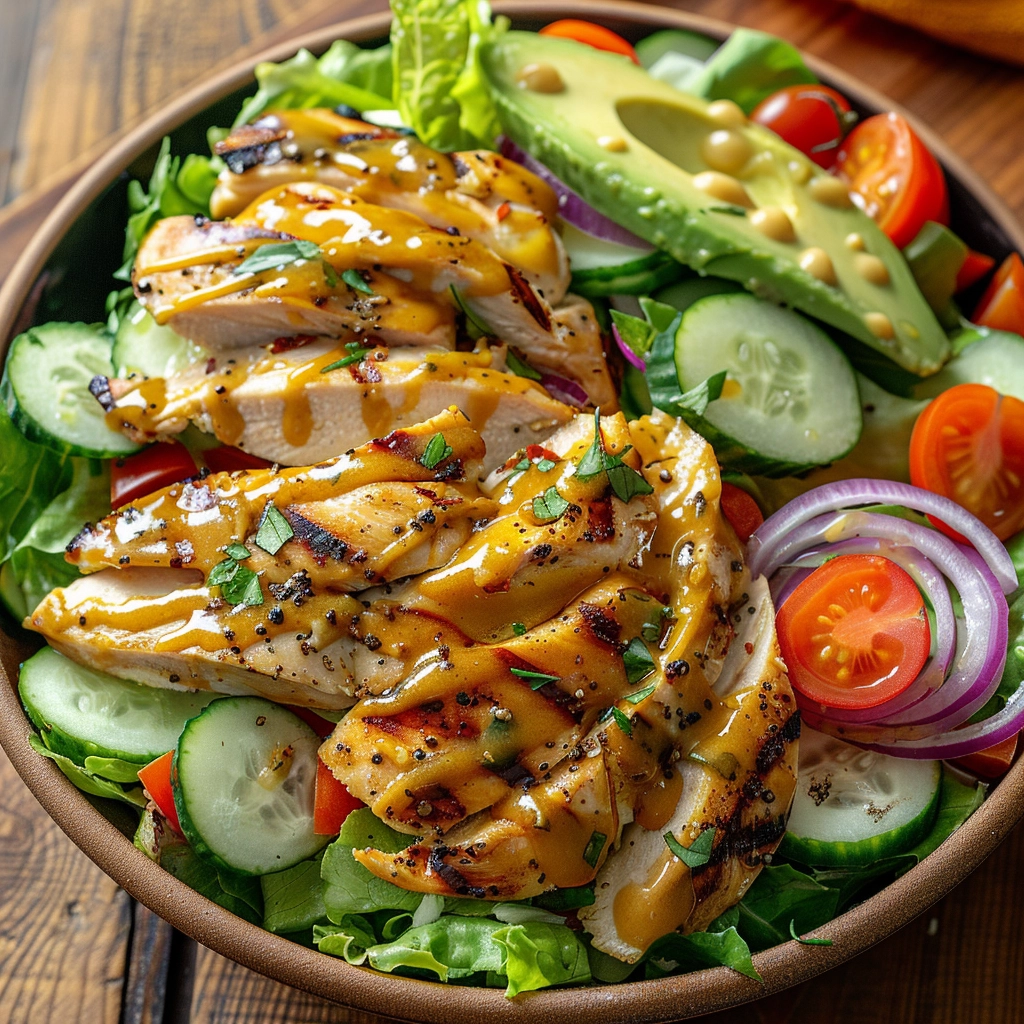
This is a salad that works for virtually every occasion. Serve it stuffed into a warm croissant for a lunch that feels genuinely indulgent. Pile it over a bed of crisp mixed greens for a light dinner that still delivers substance. Pack it into meal prep containers on Sunday and enjoy genuinely exciting lunches every day of the working week. Bring it to a potluck in a large bowl and watch it disappear before the dishes that required twice the effort. Honey Mustard Chicken Salad does all of this without asking much in return — just good ingredients, a well-made dressing, and the willingness to let the flavors speak for themselves.
This article covers everything — the ingredients that make it exceptional, a detailed step-by-step recipe, expert tips, multiple serving ideas, creative variations, nutritional benefits, and a comprehensive FAQ section.
Why Honey Mustard Works So Brilliantly in Chicken Salad
Before exploring the recipe itself, it is worth understanding why the honey mustard combination works so extraordinarily well in the context of a chicken salad.
Mustard contains compounds called glucosinolates that break down into isothiocyanates — the molecules responsible for mustard’s characteristic sharp, pungent heat. When combined with a fat-based ingredient like mayonnaise, these compounds are partially buffered, producing a flavor that retains mustard’s complexity and tang without its raw sharpness. The result is a dressing that tastes nuanced and layered rather than simply sharp.
Honey introduces fructose and glucose in proportions that provide sweetness with a complexity that refined sugar cannot match. Raw or minimally processed honey carries floral, fruity, and sometimes earthy notes depending on its botanical origin — clover honey is mild and clean, wildflower honey is more complex and floral, buckwheat honey is robust and almost molasses-like. Each variety produces a slightly different honey mustard dressing, allowing significant customization with a single ingredient swap.
The acidity from a touch of apple cider vinegar or lemon juice in the dressing activates the flavors of both the honey and the mustard while cutting through the richness of the mayonnaise — preventing the dressing from feeling heavy or cloying. Together, these elements create a dressing with genuine depth that elevates every ingredient it touches.
Chicken is the ideal protein for this dressing because its mild, clean flavor provides a canvas rather than a competitor. Unlike stronger-flavored proteins such as tuna or salmon, chicken allows the honey mustard dressing to define the character of the dish completely while still providing satisfying substance and complete protein nutrition.
Key Ingredients
The Chicken
The quality of the chicken — both its preparation method and its handling — is the foundation upon which the entire salad rests.
Poached chicken simmered gently in seasoned water or broth produces the most tender, moist result. The key is keeping the poaching liquid at a gentle simmer rather than a rolling boil — aggressive boiling toughens the protein fibers and produces dry, stringy chicken regardless of how briefly it is cooked. Season the poaching liquid generously with salt, a bay leaf, a few garlic cloves, and a halved onion for chicken that is flavorful from the inside out.
Baked chicken breasts cooked at a moderate temperature — 375°F (190°C) — with a light drizzle of olive oil, salt, and pepper produce a slightly firmer texture with a clean, roasted flavor that holds up well in the salad. Allow to rest completely before shredding.
Rotisserie chicken is the most practical option and should be embraced without apology. Pull the meat from all parts of the bird — breast, thigh, and leg — for a mixture that balances lean breast meat with the juicier, more flavorful thigh meat. Two cups of shredded rotisserie chicken assembled into this salad produces results that rival anything cooked from scratch.
Grilled chicken adds a smoky, lightly charred quality that pairs particularly well with the honey mustard dressing. The slight bitterness of the grill char against the sweetness of the honey creates an interesting flavor contrast that takes the salad in a more sophisticated direction.
Regardless of cooking method, shred the chicken with two forks into generous, irregular pieces rather than dicing it uniformly. Shredded chicken absorbs the dressing more thoroughly and produces a more cohesive salad with a pleasing, varied texture.
The Honey Mustard Dressing
The dressing is the defining element of this salad and making it from scratch produces results that are dramatically superior to any bottled honey mustard available commercially.
Classic Honey Mustard Dressing:
- ⅓ cup mayonnaise (good quality, full-fat)
- 2 tablespoons Dijon mustard
- 1 tablespoon whole grain mustard
- 2 tablespoons raw honey
- 1 tablespoon apple cider vinegar
- 1 teaspoon fresh lemon juice
- ¼ teaspoon garlic powder
- Salt and freshly cracked black pepper to taste
The combination of Dijon and whole grain mustard is deliberate and important. Dijon provides the smooth, sharp, clean mustard flavor that forms the backbone of the dressing. Whole grain mustard adds visual texture — the visible mustard seeds create an attractive, rustic appearance — and a slightly coarser, more complex mustard character that elevates the dressing beyond simple smoothness.
Whisk all ingredients together vigorously until completely emulsified. The dressing should be smooth, creamy, glossy, and uniformly colored. Taste critically before adding it to the salad — it should be noticeably sweet, noticeably tangy, and perfectly salted. Adjust with additional honey for more sweetness, more Dijon for more sharpness, or more vinegar for additional acidity as needed.
For a lighter dressing, replace half the mayonnaise with plain Greek yogurt. The yogurt adds a pleasant tanginess alongside its protein content and significantly reduces the calorie count without sacrificing creaminess. A fully Greek yogurt-based dressing — with no mayonnaise — is lighter still and produces a dressing with a more pronounced tang that suits those who prefer a sharper flavor profile.
The Salad Components
The supporting ingredients in Honey Mustard Chicken Salad each play a defined role in building texture, flavor, and visual appeal.
Celery: The essential crunch element. Finely diced celery provides a refreshing, slightly bitter snap that prevents the salad from becoming uniformly soft and creamy. Use the inner stalks for a more delicate flavor and tenderer texture than the tough outer ribs.
Red grapes: Halved red grapes introduce juicy bursts of sweetness that mirror the honey element in the dressing and add a jewel-like color to the finished salad. Their texture — firm, juicy, and slightly tart at the skin — provides a pleasant contrast to the creaminess of the dressed chicken. Alternatively, diced Honeycrisp or Fuji apple provides a similar fruit element with a crunchier texture.
Toasted pecans or walnuts: Nuts are the textural highlight of the salad — their crunch, richness, and earthy warmth complement the sweet-tangy dressing beautifully. Pecans pair particularly well with honey mustard due to their natural butterscotch sweetness. Walnuts contribute a slightly more bitter, complex counterpoint. Always toast the nuts before adding them — three to four minutes in a dry skillet over medium heat transforms their flavor dramatically and ensures they retain their crunch.
Red onion: Thinly sliced red onion adds a sharp, assertive bite that cuts through the sweetness of the honey and the richness of the mayonnaise. For a milder result, soak the sliced onion in cold water for ten minutes before using — this removes the most volatile sulfur compounds and leaves a pleasantly mild onion flavor without the raw sharpness.
Fresh herbs: Flat-leaf parsley adds color and a clean, slightly peppery freshness. Fresh tarragon — with its distinctive, elegant anise-like quality — is the most sophisticated herb pairing for both chicken and mustard and elevates the salad into genuinely refined territory. Fresh chives scatter beautifully as a garnish and add a delicate onion note.
Dried cranberries: An optional but excellent addition that echoes the sweetness of the honey while adding a chewy, tart dimension. Their deep red color makes the salad more visually attractive and their flavor pairs naturally with both honey and mustard.
Step-by-Step Recipe
Prep Time: 20 minutes Cook Time: 20 minutes (if poaching chicken from scratch) Total Time: 40 minutes Servings: 4 to 6
Ingredients
For the salad:
- 3 cups cooked, shredded chicken (approximately 2 large breasts or 1 rotisserie chicken)
- 3 stalks celery, finely diced
- 1 cup red grapes, halved (or 1 medium Honeycrisp apple, diced)
- ⅓ cup toasted pecans, roughly chopped
- ¼ red onion, very thinly sliced
- ¼ cup dried cranberries (optional)
- 3 tablespoons fresh flat-leaf parsley, roughly chopped
- 1 tablespoon fresh tarragon leaves (optional but highly recommended)
For the honey mustard dressing:
- ⅓ cup mayonnaise
- 2 tablespoons Dijon mustard
- 1 tablespoon whole grain mustard
- 2 tablespoons raw honey
- 1 tablespoon apple cider vinegar
- 1 teaspoon fresh lemon juice
- ¼ teaspoon garlic powder
- Salt and freshly cracked black pepper to taste
Instructions
Step 1 — Cook and shred the chicken. If poaching from scratch, place chicken breasts in a medium saucepan. Cover completely with cold water or low-sodium chicken broth. Add a generous pinch of salt, two garlic cloves, one bay leaf, and a few whole peppercorns. Bring to a very gentle simmer over medium heat — never a rolling boil. Poach for 16 to 18 minutes until the thickest part of each breast registers 165°F (74°C) on an instant-read thermometer. Remove from the liquid and allow to rest and cool for ten minutes before shredding into generous, irregular pieces with two forks. If using rotisserie chicken, remove the skin, pull all the meat from the bones, and shred by hand directly into a large bowl.
Step 2 — Toast the pecans. Place the pecans in a dry skillet over medium heat. Toast for 3 to 4 minutes, stirring or tossing every thirty seconds, until the nuts are fragrant, slightly darkened, and beginning to develop golden color on their surfaces. Remove immediately to a clean plate — nuts left in the hot pan continue cooking from residual heat and can burn quickly. Allow to cool completely before roughly chopping and adding to the salad.
Step 3 — Prepare the vegetables and fruit. Finely dice the celery stalks. Halve the red grapes or dice the apple into small cubes. Slice the red onion as thinly as possible — a mandoline produces beautifully uniform, paper-thin slices if available. If the onion is particularly sharp, soak the slices in a small bowl of cold water for ten minutes, then drain and pat dry. Roughly chop the parsley and pick the tarragon leaves from their stems.
Step 4 — Make the honey mustard dressing. Combine the mayonnaise, Dijon mustard, whole grain mustard, honey, apple cider vinegar, lemon juice, and garlic powder in a small bowl. Whisk vigorously until the mixture is completely smooth, uniformly colored, and well emulsified. The dressing should be thick enough to coat the back of a spoon. Season with salt and freshly cracked black pepper. Taste carefully — this is the most important tasting moment in the recipe. The dressing should have a clear sweetness, a clear tanginess, and a clean, well-seasoned finish. Adjust each element individually until the balance feels exactly right to your palate.
Step 5 — Combine the salad. Place the shredded chicken in a large mixing bowl. Add the diced celery, halved grapes, sliced red onion, dried cranberries if using, and fresh herbs. Pour approximately three-quarters of the dressing over the ingredients and fold everything together gently with a large spoon or rubber spatula until every component is evenly coated. Add the remaining dressing if the salad seems dry — the correct consistency is creamy and cohesive without being swimming in dressing. Add the toasted pecans last and fold through once or twice to distribute without breaking them down.
Step 6 — Rest in the refrigerator. Cover the bowl tightly with plastic wrap and refrigerate for at least 20 minutes before serving. This resting period allows the dressing to penetrate the chicken, the flavors to meld into one cohesive whole, and the salad to reach a temperature that makes it more refreshing and more pleasant to eat. A salad eaten immediately after mixing tastes good. The same salad after twenty minutes in the refrigerator tastes noticeably better.
Step 7 — Final taste and serve. Remove from the refrigerator, taste once more, and add a final pinch of salt or an extra squeeze of lemon juice if needed. Serve in your chosen format — see the serving suggestions section below for the full range of options. Garnish with a few extra pecan pieces, a scatter of fresh herbs, and a light drizzle of honey across the top for a beautiful, appetizing presentation.
Expert Tips for the Best Results
Use both Dijon and whole grain mustard. The two mustard varieties complement each other in ways that neither achieves alone. Dijon provides smoothness, sharpness, and the characteristic mustard heat. Whole grain provides visual texture, complexity, and a slightly more rustic, earthy mustard character. Using both produces a dressing with significantly more dimension than either would alone.
Honey quality matters. Raw, minimally processed honey has a more complex, nuanced flavor than highly processed commercial honey. It also retains more of its natural enzymes and antioxidants. Choosing a honey with a flavor profile that appeals to you — clover for clean sweetness, wildflower for floral complexity, orange blossom for citrus undertones — subtly shapes the character of the finished dressing.
Shred, never dice. The instruction to shred rather than dice the chicken appears in virtually every quality chicken salad recipe for good reason. Shredded chicken has more surface area, which means more of it comes into contact with the dressing. More contact means more flavor absorption. The result is chicken that tastes of honey mustard throughout rather than merely being coated in dressing on the outside.
Toast the nuts every time. Raw pecans have a somewhat flat, slightly waxy flavor. Toasted pecans have a deeply nutty, butterscotch warmth that transforms the entire salad. The three to four minutes required to toast them is one of the best flavor investments in this recipe.
Season in layers. Season the poaching liquid when cooking the chicken. Season the dressing carefully before adding it to the salad. Taste and season once more after combining everything. Final seasoning after refrigeration is often necessary because cold temperatures slightly mute flavors, and what tasted perfectly seasoned at room temperature may need a touch more salt straight from the fridge.
Do not overdress. Add the dressing in stages rather than all at once. Begin with three-quarters of the prepared dressing and assess the consistency — the salad should be creamy and cohesive without being wet or heavy. Reserve the remaining dressing to serve alongside for those who prefer a more generously dressed portion.
Serving Suggestions
Honey Mustard Chicken Salad is one of the most versatile dishes in terms of serving options. It adapts to virtually any presentation without losing what makes it so appealing.
The croissant sandwich is the most indulgent and beloved serving format. A warm, flaky, buttery croissant split and filled generously with honey mustard chicken salad and a few leaves of butter lettuce is a genuinely spectacular combination — the butteriness of the croissant harmonizing naturally with the sweetness of the honey in the dressing. This presentation is particularly impressive for brunch gatherings and luncheons.
On toasted sourdough or multigrain bread, the salad makes an outstanding open-faced or closed sandwich with a more substantial, chewier base that complements the creaminess of the salad with its rustic, slightly acidic character.
In lettuce cups, spooned into butter lettuce leaves, the salad becomes a light, fresh, low-carbohydrate option that showcases the colors and textures of the filling beautifully. This presentation works wonderfully as an appetizer at gatherings or as a clean, refreshing lunch.
Stuffed in an avocado half — with the pit removed to create a natural bowl — the honey mustard chicken salad sits in a perfect edible vessel that adds creamy richness and healthy fats to every bite. This is one of the most visually striking serving presentations and requires no additional accompaniment.
Over a bed of mixed greens, arugula, or butter lettuce, the salad becomes a composed main-course salad that is appropriate for dinner. Dress the greens very lightly with a squeeze of lemon juice and a drizzle of olive oil so they complement the dressed salad without competing with the honey mustard dressing.
With crackers, arranged on a platter surrounded by assorted crackers, the honey mustard chicken salad works beautifully as an appetizer spread for entertaining — elegant in presentation, effortless in preparation.
Creative Variations
Honey Mustard Chicken and Bacon Salad: Add crispy crumbled bacon to the salad for a smoky, salty dimension that contrasts beautifully with the sweet honey mustard dressing. Bacon and honey mustard is one of the most natural flavor combinations in Western cooking and its inclusion transforms an already excellent salad into something genuinely decadent.
Honey Mustard Chicken Pasta Salad: Toss the honey mustard chicken salad base with cooked, cooled rotini or bow-tie pasta for a heartier, more substantial dish that works brilliantly as a picnic contribution or potluck centerpiece. Add extra dressing to account for the pasta’s absorption.
Warm Honey Mustard Chicken Salad: Serve the dressed chicken mixture warm over a bed of wilted spinach or arugula, allowing the heat of the chicken to gently wilt the greens and the dressing to create a warm, lightly sauced composed dish that is particularly comforting in cooler months.
Southwest Honey Mustard Chicken Salad: Add black beans, roasted corn, diced avocado, and a pinch of cumin and chili powder to the dressing for a Southwest-inspired variation that bridges two beloved flavor profiles in a surprisingly harmonious way.
Honey Mustard Chicken Salad Wrap: Spread a generous layer of honey mustard chicken salad across a large flour tortilla, add shredded romaine and sliced cucumber, roll tightly, and slice diagonally for a wrap that is outstanding as a packed lunch or casual dinner.
Nutritional Benefits
Honey Mustard Chicken Salad is not merely delicious — it offers genuine nutritional value that makes it an intelligent choice for regular eating.
Shredded chicken breast provides 28 to 35 grams of complete protein per serving — all essential amino acids present in appropriate proportions — alongside niacin, vitamin B6, phosphorus, and selenium. This protein content makes the salad highly satiating, supporting sustained energy and fullness well beyond the meal.
Pecans deliver monounsaturated fatty acids alongside vitamin E, manganese, and zinc. Their fiber content contributes to the overall dietary fiber of the salad. Red grapes provide resveratrol — a polyphenol with studied antioxidant properties — alongside vitamin C, vitamin K, and natural glucose and fructose for quick energy.
Celery contributes vitamin K, potassium, folate, and vitamin C with virtually no caloric impact. Whole grain mustard contains glucosinolates that have been studied for potential cancer-protective properties. Raw honey provides trace amounts of antioxidants alongside its natural sugars.
A standard serving of Honey Mustard Chicken Salad without bread provides approximately 340 to 420 calories, 30 to 36 grams of protein, 14 to 18 grams of fat, and 18 to 22 grams of carbohydrates. Using Greek yogurt in place of mayonnaise reduces fat by approximately 40 percent while increasing protein, making it one of the more straightforward lighter adaptations available.
Frequently Asked Questions
Q1. How long does Honey Mustard Chicken Salad keep in the refrigerator?
Stored in an airtight container, Honey Mustard Chicken Salad keeps well for up to 4 days in the refrigerator. The flavor actually improves over the first 24 hours as the dressing continues to penetrate the chicken and the individual flavors meld into a more unified whole. After day three, the celery begins to soften slightly and the nuts lose some of their crunch. For the best texture throughout the week, store the toasted nuts separately and add them to individual portions just before eating.
Q2. Can I use yellow mustard instead of Dijon?
Yellow mustard is milder, less complex, and more sharply acidic than Dijon, and produces a noticeably different dressing character. It will make the dressing taste more like a classic American mustard rather than the nuanced, sophisticated Dijon-based dressing that defines this recipe. If Dijon is unavailable, whole grain mustard alone provides a better result than yellow mustard. If yellow mustard is the only option available, increase the honey quantity slightly to balance the additional sharpness and add a teaspoon of white wine vinegar for complexity.
Q3. Can I make this recipe dairy-free?
Yes. The base recipe contains no dairy ingredients — mayonnaise is egg-based and the dressing requires no dairy additions. Use a dairy-free mayonnaise alternative — those made with avocado oil or from certified vegan brands work well and taste very similar to standard mayonnaise in a dressing application. If substituting Greek yogurt in the dressing, replace with a coconut-based or cashew-based dairy-free yogurt instead.
Q4. What is the best honey to use in this dressing?
Raw, unfiltered honey produces the most complex and flavorful dressing. Clover honey is the most widely available variety with a clean, mild sweetness that works beautifully in this context. Wildflower honey adds floral complexity. Orange blossom honey introduces a subtle citrus undertone that pairs particularly well with the lemon juice in the dressing. Buckwheat honey is robust and dark with an almost molasses-like character — bold enough to stand up to the mustard in a way that lighter honeys cannot. Avoid highly processed supermarket honey that has been heated and filtered to the point where most of its complexity has been eliminated.
Q5. How do I prevent the salad from becoming watery over time?
Excess moisture typically comes from the grapes or apple releasing juice into the dressing and from the celery softening over time. To minimize this, pat the halved grapes dry with a paper towel before adding them. Dice the celery very finely rather than into large pieces — smaller pieces release less moisture. If making the salad a day ahead, keep the fruit separate and fold it in an hour before serving. If the salad does develop excess moisture after storage, simply drain the liquid, taste, and add a small amount of fresh dressing to restore the consistency.
Q6. Can I freeze Honey Mustard Chicken Salad?
Freezing is not recommended for the assembled salad. Mayonnaise-based dressings separate upon thawing, producing a broken, watery, unpleasant texture. The celery loses all of its crunch. The grapes become mushy. However, the cooked shredded chicken itself freezes very well for up to three months — freeze the plain chicken, then assemble the salad fresh with new vegetables, fruit, and freshly made dressing when needed.
Q7. Is Honey Mustard Chicken Salad suitable for a low-carb or keto diet?
The base salad — chicken, mayonnaise, mustard, celery, and nuts — is very low in carbohydrates and fully compatible with low-carb and ketogenic eating frameworks. The honey and grapes are the primary carbohydrate sources. To make the salad strictly keto-compatible, replace the honey with a sugar-free honey substitute (monk fruit or erythritol-based options are available), omit the grapes and replace with diced cucumber or additional celery, and skip the dried cranberries. Serve in lettuce cups rather than bread. The flavor remains excellent with these adjustments.
Q8. What makes the dressing hold together without separating?
The emulsification of the dressing — its smooth, creamy consistency — is maintained primarily by the lecithin in the egg yolks within the mayonnaise. This naturally occurring emulsifier binds the fat and water-based ingredients together into a stable mixture. Whisking vigorously during preparation helps establish the emulsion. If the dressing separates after refrigerating, simply whisk it again before use — this is completely normal and does not indicate a problem with the dressing.
Conclusion
Honey Mustard Chicken Salad earns its devoted following through a combination of qualities that few recipes can simultaneously deliver. It is bright and bold without being aggressive. It is rich and satisfying without being heavy. It is simple enough to make on a busy weekday evening and refined enough to serve at a formal lunch. It is the kind of recipe that reveals more of itself each time you make it — the honey you choose, the mustard ratio you prefer, the addition of tarragon or the preference for parsley, the grape versus apple decision — all of these small choices accumulate into a salad that becomes specifically and personally yours over time.
The honey mustard dressing is the key to everything. Make it from scratch, use both Dijon and whole grain mustard, choose good raw honey, balance it with enough acidity, and taste it critically before it touches the chicken. Do this, and the rest of the recipe — the shredded chicken, the toasted pecans, the crisp celery, the juicy grapes — falls beautifully into place around it.
This is not a complicated recipe. It is a careful one. And the difference between careful cooking and careless cooking is exactly the difference between a Honey Mustard Chicken Salad that is good and one that is genuinely unforgettable. Make it carefully, make it your own, and make it often — because this is the kind of dish that improves every table it appears on.