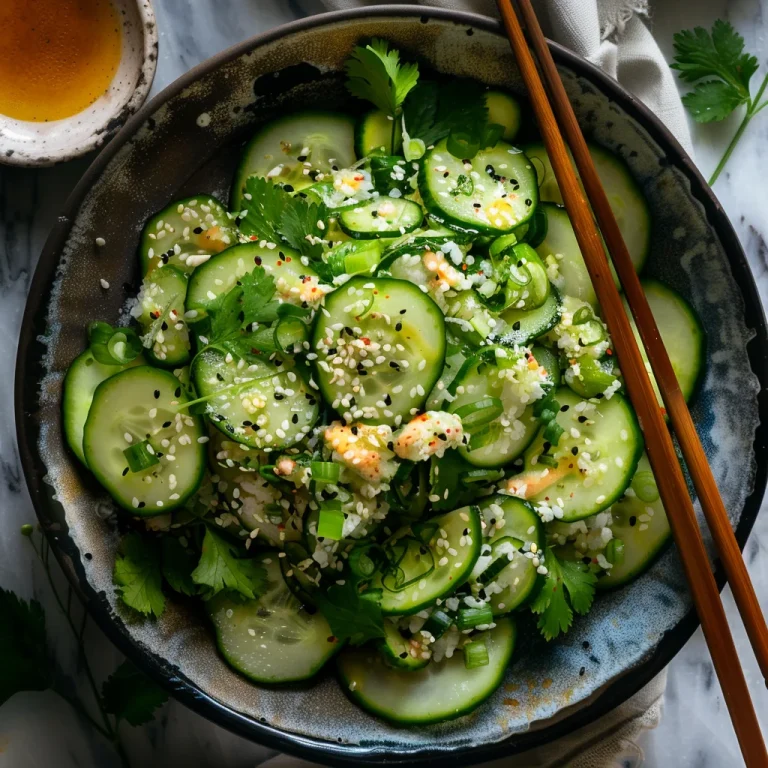
Sushi Cucumber Salad Recipe: The Light, Refreshing Japanese Classic You Can Make at Home
There is a particular kind of dish that manages to be simultaneously humble and extraordinary — one that asks very little in terms of ingredients or technique yet delivers a flavor experience that feels polished, intentional, and deeply satisfying. Sushi Cucumber Salad is precisely that kind of dish. Known in Japanese cuisine as sunomono — a word that translates loosely as “vinegared things” — this delicate, refreshing salad has been a beloved fixture on Japanese tables and in sushi restaurants around the world for generations, and for reasons that become immediately apparent the moment you taste it.
At its most essential, Sushi Cucumber Salad is thinly sliced cucumber marinated in a sweet rice vinegar dressing seasoned with soy sauce, sesame oil, and a touch of sugar. That description, accurate as it is, barely captures the experience. The cucumbers — paper-thin, lightly salted, and perfectly crisp — absorb the dressing completely, becoming something that is at once intensely flavored and refreshingly clean. The sesame oil adds a nutty warmth. The rice vinegar provides a gentle acidity that is quite different from the sharpness of Western vinegars. A scatter of toasted sesame seeds, a few ribbons of nori, or a handful of cooked shrimp or imitation crab can elevate the salad further without complicating it.
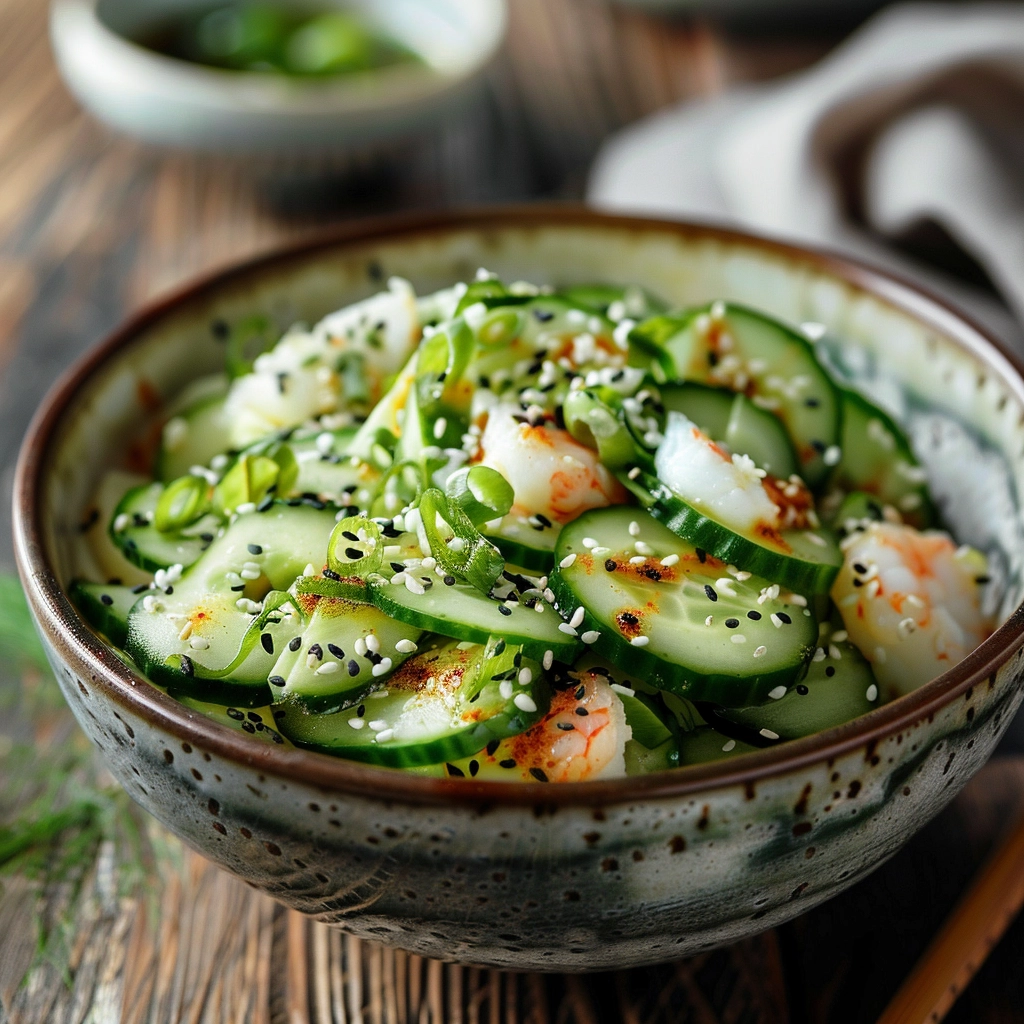
What makes Sushi Cucumber Salad particularly appealing to the modern home cook is its extraordinary versatility and efficiency. It comes together in under twenty minutes, requires no cooking beyond optional protein additions, improves with time in the refrigerator, pairs with almost everything, and provides a genuinely restaurant-quality result from an entirely approachable set of ingredients. It is the side dish that makes a simple weeknight dinner feel considered and special. It is the starter that sets the tone for an entire Japanese-inspired meal. It is the palate cleanser between rich dishes that reminds everyone at the table what it means to eat something truly fresh.
This article explores everything about Sushi Cucumber Salad — its cultural roots, the technique behind making it properly, the ingredients that define its character, a detailed step-by-step recipe, expert tips, serving ideas, creative variations, nutritional benefits, and a comprehensive FAQ section.
The Cultural Story of Sunomono
Sunomono — the broader category of Japanese vinegared salads to which Sushi Cucumber Salad belongs — has roots that stretch back centuries in Japanese culinary tradition. The use of vinegar as a flavoring and preservative agent has been fundamental to Japanese cooking since rice vinegar was first produced from fermented rice sometime around the 4th or 5th century CE.
The word sunomono comes from “su” meaning vinegar and “mono” meaning thing — a characteristically understated Japanese naming convention that reveals very little about the sublime result. Sunomono appears throughout Japanese cuisine in many forms — with wakame seaweed, with octopus, with clams, with daikon radish — but the cucumber version remains the most widely known and universally loved, particularly in the context of sushi restaurant service where it is often offered as a palate-cleansing accompaniment to richer dishes.
The connection to sushi is not merely coincidental. The same seasoned rice vinegar dressing that flavors sunomono is closely related to the su-meshi seasoning used to prepare sushi rice — a blend of rice vinegar, sugar, and salt that gives sushi rice its distinctive, slightly sweet-sour character. Sushi Cucumber Salad became the natural companion dish to sushi service because its flavors directly mirror and complement those of the sushi itself, creating a dining experience with beautiful internal coherence.
In Japan, sunomono is typically served in small, elegant portions as part of a washoku — a traditional Japanese meal structure where multiple small dishes are served simultaneously to create a balanced, varied eating experience. In Western sushi restaurants, cucumber sunomono is often offered as a starter or side dish, frequently enriched with shrimp, crab, or octopus to make it more substantial.
The Technique That Makes It Extraordinary
Sushi Cucumber Salad is a dish where technique matters more than the ingredient list suggests. Three specific practices separate a genuinely excellent version from a mediocre one.
The first is slicing the cucumber with genuine thinness. Paper-thin slices — ideally between one and two millimeters — are the goal. At this thickness, the cucumber is barely there as a physical presence but intensely present as a flavor and texture element. The thinness allows the dressing to penetrate completely rather than merely coating the surface, and it creates a texture that is simultaneously delicate and pleasingly crisp. A mandoline is the ideal tool for achieving this consistency. A sharp chef’s knife wielded with care produces good results. A dull knife produces uneven slices that ruin the salad’s character.
The second is salting the cucumber before dressing it. This step — which requires only ten to fifteen minutes — draws excess moisture out of the cucumber through osmosis, preventing the dressing from becoming diluted and waterlogged over time. Properly salted and squeezed cucumber holds its crisp texture significantly longer after dressing and absorbs the vinegar marinade more efficiently because the cells have been partially opened by the salt.
The third is balancing the dressing carefully. The ratio of rice vinegar to sugar to soy sauce to sesame oil must be in proportion — too much vinegar produces harshness, too much sugar produces cloying sweetness, too much soy sauce overwhelms the delicacy of the cucumber and sesame, and too much sesame oil makes the dressing heavy. The goal is a dressing that is light, bright, subtly sweet, gently acidic, and quietly umami — a combination that enhances the cucumber without masking it.
Key Ingredients
The Cucumber
The cucumber is the undisputed star of this salad and its selection deserves careful attention.
Japanese cucumbers — thin, dark green, seedless, with a very delicate skin — are the traditional and most appropriate choice. They have almost no bitterness, very small seeds that require no removal, and a mild, clean flavor that allows the dressing to define the character of the salad completely. If available at Asian grocery stores, they are worth seeking out specifically for this recipe.
Persian cucumbers are the most widely available excellent substitute. They share the seedless quality and thin skin of Japanese cucumbers, have a similar mild sweetness, and produce beautifully uniform slices. They are the preferred choice for most home cooks outside Japan.
English cucumbers are the most commonly found alternative in standard supermarkets and produce very good results. Their larger diameter means slices are wider, but their thin skin, minimal seeds, and mild flavor make them a perfectly appropriate choice for sunomono.
Avoid regular garden cucumbers with their thick, bitter skin and large, watery seed cavity unless peeling and seeding them completely before use.
The Dressing
The dressing is where the magic lives in this salad, and its precise balance defines everything.
Classic Sunomono Dressing:
- 3 tablespoons unseasoned rice vinegar
- 1½ tablespoons sugar (white or caster)
- 1 tablespoon soy sauce or tamari
- 1 teaspoon sesame oil
- ½ teaspoon fresh ginger, finely grated (optional but excellent)
- Pinch of salt
Combine all ingredients in a small saucepan and warm over low heat, stirring until the sugar dissolves completely — approximately two minutes. Do not allow the mixture to boil. Remove from heat and allow to cool completely before using. Warming the dressing dissolves the sugar more efficiently than cold mixing and slightly mellows the sharpness of the rice vinegar.
The use of unseasoned rice vinegar is important — seasoned rice vinegar already contains sugar and salt, which disrupts the balance of the dressing. Always use unseasoned rice vinegar and control the seasoning yourself.
Supporting Ingredients
Toasted sesame seeds: Scattered generously over the finished salad, toasted sesame seeds add a nutty crunch, visual appeal, and a warmth that complements the sesame oil in the dressing. Toast them in a dry skillet for two to three minutes until golden and fragrant. White sesame seeds are traditional. Black sesame seeds add a more dramatic visual contrast.
Wakame seaweed: Rehydrated dried wakame is the most traditional addition to sunomono alongside cucumber. It adds a distinctly oceanic, slightly briny flavor and a silky texture that is uniquely Japanese in character. Soak dried wakame in cold water for five minutes until fully rehydrated, drain, squeeze gently, and add to the salad alongside the cucumber.
Imitation crab or real crab: Shredded crab — real or imitation — makes Sushi Cucumber Salad more substantial and adds a sweet seafood note that reflects the sushi restaurant tradition. Imitation crab (surimi) is affordable, widely available, and works very well. Real cooked crab is an indulgent upgrade.
Cooked shrimp: Small cooked shrimp — chilled — add protein and elegance. Their sweetness complements the rice vinegar dressing naturally and their coral-pink color makes the salad visually striking.
Sliced scallions or green onions: Add a mild onion freshness and a delicate green color. Slice thinly on a diagonal for visual appeal.
Pickled ginger: The same pickled ginger served alongside sushi (gari) can be added to the salad in thin ribbons for a gentle spice and an additional layer of acidity.
Tofu: Firm tofu, cut into small cubes and lightly seasoned, makes the salad appropriate as a plant-based main course rather than a side dish.
Step-by-Step Recipe
Prep Time: 20 minutes Resting Time: 15 minutes Total Time: 35 minutes Servings: 4
Ingredients
For the salad:
- 2 medium Persian or Japanese cucumbers (or 1 large English cucumber)
- 1 teaspoon salt (for drawing out moisture)
- ½ cup rehydrated wakame seaweed (optional)
- ½ cup imitation crab or cooked small shrimp (optional)
- 2 green onions, thinly sliced on a diagonal
- 1 tablespoon toasted white sesame seeds
- 1 teaspoon black sesame seeds (optional, for contrast)
For the sunomono dressing:
- 3 tablespoons unseasoned rice vinegar
- 1½ tablespoons white sugar
- 1 tablespoon soy sauce or tamari
- 1 teaspoon sesame oil
- ½ teaspoon fresh ginger, finely grated
- Pinch of salt
Instructions
Step 1 — Slice the cucumber. Wash the cucumbers thoroughly. If using Persian or Japanese cucumbers, leave the skin on — it adds color and texture. If using English cucumber, the skin can be left on or partially peeled in alternating strips for an attractive striped appearance. Slice the cucumbers as thinly as possible — aim for slices between one and two millimeters thick. A mandoline set to its thinnest setting produces ideal, consistent results. Arrange the slices in a large bowl.
Step 2 — Salt and press the cucumber. Sprinkle the teaspoon of salt evenly over the cucumber slices and toss gently with your hands to distribute the salt thoroughly. Allow the salted cucumber to rest for 10 to 15 minutes. During this time, osmosis draws significant moisture out of the cucumber — you will see liquid pooling at the bottom of the bowl. After resting, transfer the cucumber slices to a clean kitchen towel or several layers of paper towels. Gather the towel around the cucumber and squeeze firmly but gently to express as much liquid as possible without crushing the delicate slices. The cucumber should feel noticeably drier and slightly limp rather than crisp and water-logged. Transfer to a clean dry bowl.
Step 3 — Prepare the wakame seaweed. If using dried wakame, place it in a bowl of cold water and allow to rehydrate for 5 minutes. It will expand dramatically — a small amount of dried wakame produces a surprisingly generous quantity of rehydrated seaweed. Drain in a fine mesh sieve, squeeze gently to remove excess water, and roughly chop into bite-sized pieces if the pieces are very long. Add to the bowl with the cucumber.
Step 4 — Make the dressing. Combine the rice vinegar, sugar, soy sauce, sesame oil, grated ginger, and a pinch of salt in a small saucepan. Warm over low heat, stirring constantly, until the sugar is completely dissolved — this takes approximately two minutes. Do not allow the dressing to simmer or boil. Remove from heat immediately once the sugar has dissolved and allow to cool to room temperature. The dressing should be clear, fragrant, and slightly syrupy. Taste and adjust — more vinegar for brightness, more sugar for sweetness, more soy for umami depth.
Step 5 — Combine and marinate. Pour the cooled dressing over the cucumber and wakame mixture. Add the sliced green onions and shredded crab or shrimp if using. Toss gently with clean hands or two spoons until everything is evenly coated. The dressing should coat every slice of cucumber lightly. Cover the bowl with plastic wrap and refrigerate for at least 10 minutes — ideally 20 to 30 minutes — allowing the cucumber to absorb the dressing fully and the flavors to meld completely.
Step 6 — Plate and garnish. When ready to serve, use tongs or a slotted spoon to transfer the salad to individual serving bowls or a large platter, leaving behind any excess dressing that has not been absorbed. Scatter the toasted white sesame seeds generously over the top. Add black sesame seeds if using for visual contrast. Serve immediately — or within the hour — while the cucumber retains its pleasant texture and the dressing flavors are at their brightest.
Expert Tips for a Perfect Sushi Cucumber Salad
Slice thinner than you think is necessary. The most common mistake in making sunomono is slicing the cucumber too thick. What feels like a thin slice by normal cooking standards is often twice as thick as it should be for this salad. Set your mandoline to its very thinnest setting. If cutting by hand, take genuine care to produce the thinnest slices your knife skills allow. The thinness is not merely aesthetic — it fundamentally changes how the dressing is absorbed and how the salad tastes.
Do not skip the salting step. The temptation to save ten minutes by skipping the salt-and-press step is understandable but counterproductive. Without salting, the cucumber releases its moisture into the dressing during marinating, producing a diluted, watery salad that tastes flat and lacks the concentrated flavor that defines great sunomono. The salting step is the single most important technique in this recipe.
Cool the dressing completely before using. Warm dressing poured over the cucumber accelerates the breakdown of the vegetable’s cell structure, producing soft, mushy slices rather than the crisp-tender texture that makes this salad so appealing. Always allow the dressing to reach room temperature before combining with the cucumber.
Use unseasoned rice vinegar. The distinction between seasoned and unseasoned rice vinegar is critical. Seasoned rice vinegar has already been mixed with sugar and salt by the manufacturer — adding it to a dressing recipe that also calls for sugar and salt will throw the balance completely off. Always check the label and ensure you are using unseasoned rice vinegar so you control the seasoning yourself.
Serve with a slotted spoon. After marinating, the cucumber will have released additional moisture into the dressing, pooling excess liquid at the bottom of the bowl. Serving with a slotted spoon ensures that individual portions get the cucumber and garnishes without drowning in accumulated liquid, which would dilute the flavor of the dressing.
Add sesame seeds at the last moment. Toasted sesame seeds lose their pleasant crunch relatively quickly once they contact moisture. Scatter them over individual portions immediately before serving rather than mixing them into the salad during preparation, where they will soften in the dressing.
Serving Suggestions
Sushi Cucumber Salad occupies a uniquely versatile position in the menu — light enough to serve as a starter or palate cleanser, substantial enough with protein additions to function as a light main course, and compatible enough with a wide range of other dishes to serve as a side at virtually any Asian-inspired meal.
In its most natural context, serve sunomono alongside sushi, sashimi, or hand rolls as part of a Japanese-inspired spread. The clean acidity and refreshing character of the salad provides an ideal contrast to the richness of fatty fish and the density of sushi rice. It functions as the sip of tea between courses — a reset for the palate that makes the next bite of sushi taste even better.
As part of a broader Asian-inspired dinner, sushi cucumber salad pairs beautifully with miso soup, edamame, teriyaki chicken or salmon, steamed dumplings, and jasmine rice. The salad provides the fresh, acidic element that these richer dishes benefit from alongside them.
For a light, health-conscious lunch, serve a generous portion of sushi cucumber salad over a bed of mixed greens with sliced avocado, steamed edamame, and a scattering of sesame seeds. Drizzle with a small amount of additional dressing for a composed salad bowl that is nutritious, satisfying, and genuinely beautiful.
Creative Variations
Spicy Tuna Sunomono: Add diced sashimi-grade tuna tossed in a small amount of sriracha mayo alongside the cucumber and wakame for a luxurious version that captures the flavors of a spicy tuna roll in salad form.
Mango and Cucumber Sunomono: Add thinly sliced ripe mango to the salad for a tropical sweetness that pairs beautifully with the rice vinegar dressing and creates a vibrant, colorful presentation.
Avocado Sunomono: Add diced ripe avocado to the dressed cucumber for a creamy, rich element that contrasts magnificently with the acidic dressing and adds a California roll-inspired character.
Daikon and Cucumber Sunomono: Replace half the cucumber with very thinly sliced daikon radish for a more traditional, complex sunomono with a slightly peppery bite and an additional layer of crunch.
Sesame Tofu Sunomono: Add cubed firm silken tofu seasoned with a light brush of soy sauce to the salad for a plant-based protein addition that absorbs the dressing beautifully and makes the salad appropriate as a vegan main course.
Salmon Sunomono: Add thinly sliced smoked salmon or lightly seared fresh salmon alongside the cucumber for a more substantial version with a rich, savory salmon note that complements the rice vinegar dressing naturally.
Nutritional Benefits
Sushi Cucumber Salad is one of the most nutritionally virtuous dishes in the entire Japanese culinary tradition — a remarkable combination of minimal calories and genuine nutritional value.
Cucumber is approximately 96 percent water, making it one of the most hydrating foods available. It provides vitamin K, which supports bone health and proper blood clotting, alongside potassium, magnesium, and small amounts of B vitamins. Its high water content and dietary fiber contribute to satiety with minimal caloric impact.
Rice vinegar contains acetic acid, which has been studied for its potential role in supporting healthy blood sugar levels and improving insulin sensitivity. It also contributes to the salad’s natural preservation quality, extending its palatable life in the refrigerator.
Sesame seeds are a nutritional powerhouse despite their small size — providing calcium, iron, magnesium, zinc, and sesamin, a lignin with documented antioxidant and anti-inflammatory properties. Toasted sesame oil contributes additional sesamin alongside heart-healthy polyunsaturated and monounsaturated fatty acids.
Wakame seaweed adds iodine — essential for healthy thyroid function — alongside fucoidan, a polysaccharide with studied immune-modulating and anti-inflammatory properties. It also contributes iron, calcium, and vitamins A and C.
A standard serving of Sushi Cucumber Salad without protein additions contains only 60 to 90 calories — making it one of the most calorie-efficient satisfying dishes available. With shrimp added, the calorie count rises to approximately 120 to 150 per serving with the addition of 15 to 18 grams of lean protein.
Frequently Asked Questions
Q1. What is the difference between sunomono and regular cucumber salad?
Sunomono is a specifically Japanese preparation distinguished by the use of rice vinegar — which is milder, slightly sweeter, and less acidic than Western vinegars — alongside soy sauce and sesame oil. The cucumber is salted and pressed before dressing to remove excess moisture, producing a more concentrated flavor and a longer-lasting texture. The overall flavor profile is clean, delicate, and subtly complex in a way that reflects Japanese culinary values of balance and restraint. A regular Western cucumber salad typically uses stronger vinegars and more assertive seasoning, producing a bolder, sharper flavor profile.
Q2. Can I make Sushi Cucumber Salad ahead of time?
Yes — with an important caveat about timing. The salad can be prepared up to 24 hours in advance and stored in an airtight container in the refrigerator. The flavor improves over the first two to four hours as the cucumber absorbs the dressing more deeply. However, beyond twelve hours, the cucumber begins to soften noticeably and the salad loses the crisp texture that is fundamental to its appeal. For the best balance of advanced preparation and ideal texture, make the salad three to four hours before serving and refrigerate until needed. Always add the sesame seeds immediately before serving.
Q3. Where can I find rice vinegar and wakame seaweed?
Both ingredients are widely available. Rice vinegar — specifically unseasoned rice vinegar — is stocked in the Asian foods aisle of most major supermarkets alongside soy sauce and sesame oil. Wakame seaweed is available dried in packets at Asian grocery stores, health food stores, and many larger supermarkets. Online retailers carry both reliably. When purchasing rice vinegar, check the label carefully for “unseasoned” — many brands produce both seasoned and unseasoned varieties and they are not interchangeable in this recipe.
Q4. How do I make this recipe without a mandoline?
A sharp chef’s knife wielded with patience and care can produce adequately thin slices, though achieving the paper-thin consistency of a mandoline is challenging by hand. The technique is to slice at a slight diagonal angle across the cucumber rather than straight across — this produces a slightly larger, thinner slice. Using a vegetable peeler to create long ribbons of cucumber is another excellent approach that produces beautifully thin, wide strips with a different but equally appealing visual presentation. A spiralizer set to its thinnest setting creates an attractive, curled cucumber noodle that works wonderfully in this dressing.
Q5. Can I use regular white vinegar instead of rice vinegar?
Rice vinegar is strongly recommended and genuinely difficult to replicate with other vinegars in this specific application. It is milder, slightly sweeter, and less sharply acidic than white vinegar, apple cider vinegar, or wine vinegar. However, if rice vinegar is genuinely unavailable, a mixture of white wine vinegar diluted slightly with water — approximately two parts white wine vinegar to one part water — and with an extra pinch of sugar to compensate for the missing natural sweetness of rice vinegar produces an acceptable substitute. Standard white distilled vinegar is too harsh and too sharp for this recipe.
Q6. Is this recipe suitable for people with gluten intolerance?
The recipe is naturally gluten-free when tamari is used in place of standard soy sauce. Regular soy sauce contains wheat and is not appropriate for those with celiac disease or gluten sensitivity. Tamari is a Japanese soy sauce traditionally brewed without wheat and is available in gluten-free certified varieties at most supermarkets. All other ingredients — rice vinegar, sesame oil, sugar, cucumber, sesame seeds, and wakame — are naturally gluten-free.
Q7. Why does my sunomono taste too sour?
Excessive sourness is almost always the result of using seasoned rice vinegar — which is more acidic than its label suggests once the sugar is removed from the equation — or of using too much vinegar relative to the sugar. First, ensure you are using unseasoned rice vinegar. If the dressing tastes too sharp after preparation, increase the sugar by half a teaspoon at a time and warm very briefly to dissolve. Adding a small additional pinch of salt often reduces the perception of sourness without adding sweetness. Allowing the dressed salad to marinate for longer also mellows the acidity as the vinegar is partially absorbed into the cucumber.
Q8. Can I add other vegetables to this salad?
Yes — sunomono welcomes additional vegetables graciously. Very thinly sliced daikon radish is the most traditional addition and complements the cucumber beautifully with a mild peppery note. Thinly sliced red bell pepper adds sweetness and color. Bean sprouts contribute additional crunch. Thinly sliced sugar snap peas add a fresh, sweet crunch that works surprisingly well with the rice vinegar dressing. Julienned carrots add color and a mild earthiness. In all cases, the additional vegetables should be sliced as thinly as the cucumber for visual consistency and to ensure they absorb the dressing at the same rate.
Conclusion
Sushi Cucumber Salad is a reminder that the most elegant food is not always the most complicated. It requires no special culinary training, no expensive equipment beyond a mandoline, and no obscure ingredients that demand a special trip to a specialty store. What it requires is attention — to the thinness of the cucumber slices, to the balance of the dressing, to the timing of the salting step, to the temperature of the dressing when it meets the cucumber. These are small attentions, each taking no more than a minute, but together they produce a result that is genuinely greater than the sum of its parts.
In its simplicity, sunomono embodies a principle that runs through all of Japanese cooking — that restraint, precision, and respect for ingredients produce more profound results than abundance, complexity, and technique for its own sake. A bowl of paper-thin cucumber slices dressed in sweet rice vinegar and sesame oil, scattered with toasted sesame seeds, is not a lesser dish for its simplicity. It is a more refined one — and every cook who makes it with care and attention will understand exactly why it has been on Japanese tables for centuries and why it will remain there for centuries more.