
PF Changs Chicken Lettuce Wraps – The Copycat Recipe That Tastes Like the Real Thing
There are certain restaurant dishes that become more than just food. They become a ritual. An expectation. The thing you order before you even look at the rest of the menu because you already know it is happening.
PF Changs chicken lettuce wraps are that dish for a remarkable number of people. Since their introduction on the PF Changs menu in the 1990s they have accumulated a following that is genuinely unusual for an appetizer. People plan visits to the restaurant specifically for them. They describe them with the kind of enthusiasm usually reserved for much more elaborate dishes. And when they try to recreate them at home they are usually surprised by how simple the ingredient list actually is.
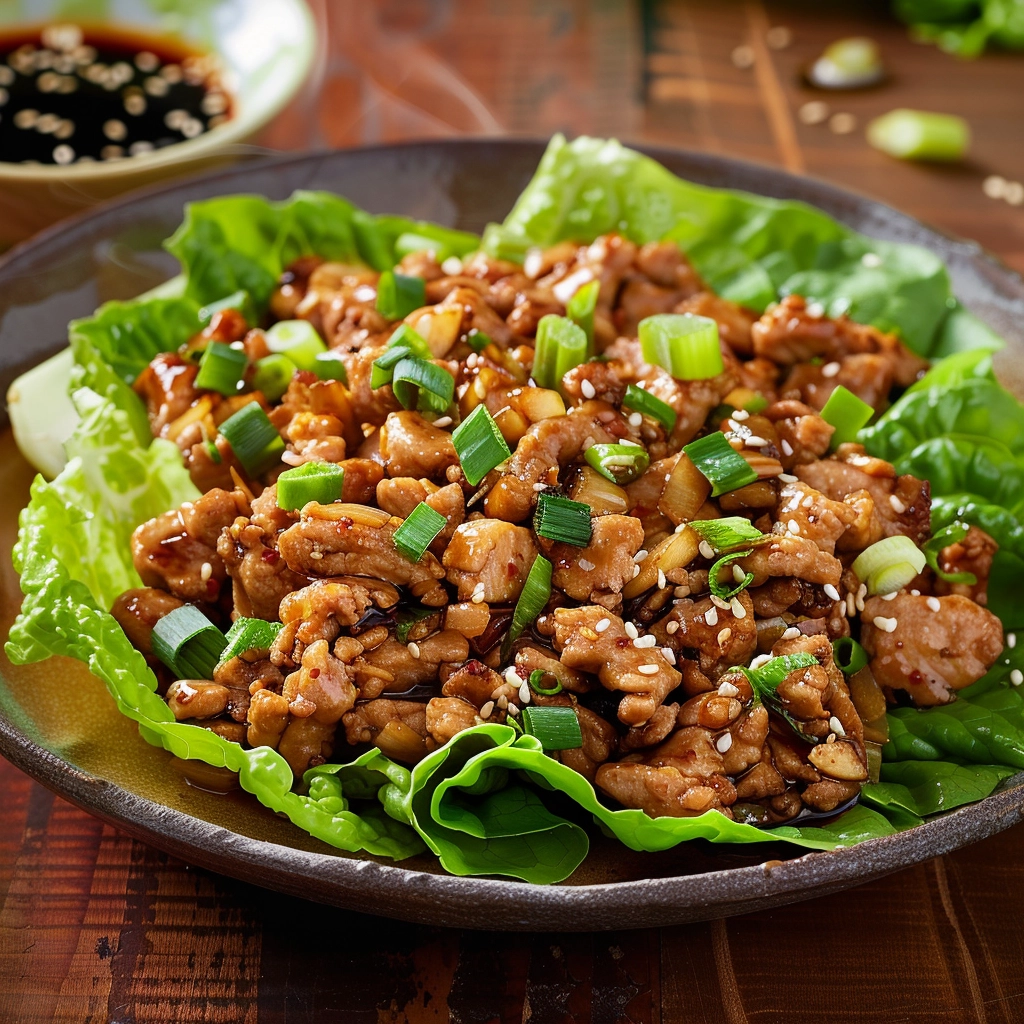
The magic of this dish is in the balance. The chicken is savory and deeply umami from the soy sauce, hoisin, and oyster sauce combination. The water chestnuts add a crunch that stays satisfying bite after bite. The cool, crisp butter lettuce provides the perfect textural contrast to the warm, saucy filling. And the whole assembly – wrapping and eating with your hands, the sauce dripping slightly – makes eating it feel interactive and fun in a way that most appetizers do not.
This recipe reverse-engineers everything that makes the original so good and puts it in a format you can make at home any weeknight without advance planning, special equipment, or hard-to-find ingredients.
WHAT MAKES THIS RECIPE ACTUALLY TASTE LIKE PF CHANGS
Most copycat recipes get one or two elements right and miss the rest. This version pays attention to the specific combination of sauces that creates the distinctive PF Changs flavor profile – and that combination is more nuanced than most people realize.
The Sauce Trinity
Three sauces work together in this recipe and each does something the others cannot.
Hoisin sauce provides the sweet, slightly spicy, deeply savory backbone. It is the most recognizable flavor in the dish and the one most people identify when they try to describe what makes it taste distinctively like PF Changs. Hoisin is made from fermented soybean paste with garlic, vinegar, and sugar – it is thick, dark, and intensely flavored.
Soy sauce adds saltiness and umami depth. Low-sodium soy sauce is recommended here because the hoisin and oyster sauce already contribute significant sodium. Regular soy sauce can make the final dish overwhelmingly salty.
Oyster sauce adds a richness and a slightly sweet, briny quality that rounds out the flavor in a way that soy sauce alone cannot achieve. It is the ingredient that most home cooks leave out of copycat recipes and its absence is exactly why those versions taste slightly flat compared to the original. Do not skip it.
The Sesame Oil Finish
A small amount of sesame oil added at the very end of cooking, off the heat, is not optional. It provides a nutty, toasty fragrance that is immediately identifiable as part of the PF Changs flavor experience. Cooking sesame oil over heat destroys its aromatic compounds – it should always be added as a finishing ingredient rather than a cooking fat.
The Water Chestnuts
Fresh water chestnuts are genuinely exceptional but difficult to find outside of Asian grocery stores. Canned water chestnuts, drained and rinsed, work perfectly well and are available in most supermarkets. Their crunch survives cooking remarkably well which is unusual for a canned vegetable. Drain, rinse, and dice them before adding.
RECIPE AT A GLANCE
WHAT YOU WILL NEED
For the Chicken Filling:
- 500g (1 lb) ground chicken (or finely minced chicken breast or thigh)
- 1 tablespoon neutral oil (vegetable or avocado oil)
- 4 garlic cloves, finely minced
- 1 tablespoon fresh ginger, finely grated
- 1 can (8 oz) water chestnuts, drained, rinsed, and finely diced
- 4 to 5 medium shiitake mushrooms, stems removed, finely diced (or cremini)
- 3 scallions, thinly sliced (white and green parts separated)
- 1/2 small onion, finely diced
For the Sauce:
- 3 tablespoons hoisin sauce
- 2 tablespoons low-sodium soy sauce
- 1 tablespoon oyster sauce
- 1 tablespoon rice vinegar
- 1 teaspoon sesame oil (added at the end)
- 1 teaspoon sugar or honey
- 1/2 teaspoon sriracha or chili garlic sauce (adjust to your heat preference)
- 1 tablespoon water (to loosen the sauce slightly)
For Serving:
- 1 large head of butter lettuce (also called Boston or Bibb lettuce), leaves separated and washed
- Extra hoisin sauce for drizzling
- Extra sriracha for heat
- Thinly sliced scallions for garnish
- Toasted sesame seeds for finishing
- Steamed white rice (optional, for serving as a main)
For the PF Changs Inspired Dipping Sauce (Optional but Authentic):
- 2 tablespoons soy sauce
- 1 tablespoon rice vinegar
- 1 teaspoon chili garlic sauce or sriracha
- 1 teaspoon sesame oil
- 1/2 teaspoon sugar
- 1 teaspoon water
THE LETTUCE MATTERS MORE THAN YOU THINK
Butter lettuce – also called Boston or Bibb lettuce – is the authentic choice for this dish and the reason is practical as well as textural. Butter lettuce leaves form natural cup shapes that hold the filling securely, have enough structural integrity to not tear or collapse when filled, and are large enough to fold and eat in two or three bites without the filling falling out.
Iceberg lettuce is a common substitute and works reasonably well – it is crispier and more crunchy than butter lettuce and holds its shape firmly but the leaves are harder to separate cleanly and the flavor is more watery and less neutral. Romaine leaves are another option though they are more trough-shaped than cup-shaped and can be harder to eat.
Whatever lettuce you use, wash and dry the leaves thoroughly and keep them cold in the refrigerator until the moment of serving. Cold, crisp lettuce against the warm filling is one of the defining pleasures of this dish and wilted room-temperature lettuce fails to provide that contrast.
HOW TO MAKE PF CHANGS CHICKEN LETTUCE WRAPS
Step 1 – Mix the Sauce First
Before anything goes near heat, mix the sauce. Combine the hoisin sauce, low-sodium soy sauce, oyster sauce, rice vinegar, sugar, sriracha, and water in a small bowl and whisk until completely smooth. Having the sauce ready before cooking begins means you can add it at exactly the right moment without fumbling with bottles and measuring spoons over a hot pan. Taste the sauce – it should taste sweet, savory, slightly tangy, and have a gentle background heat. Adjust the sriracha if you want more or less heat. Set aside.
Step 2 – Prepare All Your Ingredients
Dice the water chestnuts and mushrooms into small, uniform pieces – roughly 1/4 inch. The uniform size ensures even distribution through the filling and means every bite has water chestnut crunch rather than occasional large pieces. Separate the white and green parts of the scallions – the white parts go into the pan early with the aromatics, the green parts are used for garnish at the end. Mince the garlic and grate the ginger. Having everything prepped before the pan gets hot makes this recipe genuinely fast – the actual cooking is only about 10 minutes.
Step 3 – Brown the Chicken
Heat a large wok or skillet over high heat for two minutes. Add the oil and heat until shimmering. Add the ground chicken and spread it into a single layer across the pan. Do not stir immediately – let it cook undisturbed for 2 minutes until the bottom develops some color. Then break it up with a wooden spoon or spatula into small, crumbled pieces. Continue cooking and breaking up for another 2 to 3 minutes until no pink remains and some pieces have developed golden edges. Season lightly with salt.
Do not drain the fat if using ground chicken with some fat content – it carries flavor and the sauce absorbs it. If using very lean ground chicken breast the pan will be dry – add a small additional drizzle of oil.
Step 4 – Add the Aromatics and Vegetables
Push the cooked chicken to the edges of the pan, creating a clear space in the center. Add the diced onion and white scallion parts to the center space and cook for 60 seconds until slightly softened. Add the garlic and ginger and cook for another 30 to 45 seconds, stirring constantly, until fragrant. Now bring the chicken back into the center and stir everything together.
Add the diced mushrooms and water chestnuts and toss to combine. Cook for 2 minutes, tossing frequently, until the mushrooms have softened and released their moisture and the water chestnuts are heated through.
Step 5 – Add the Sauce
Pour the prepared sauce over the chicken mixture and toss immediately and thoroughly to coat every piece. The sauce will sizzle as it hits the hot pan – stir continuously for about 60 seconds until it has coated everything evenly and reduced slightly so it clings to the filling rather than pooling in the bottom of the pan. The filling should look glossy, fragrant, and evenly colored.
Remove the pan from the heat completely. Add the sesame oil and the green scallion parts and toss once more. The sesame oil must go in off the heat to preserve its fragrance. Taste the filling and adjust seasoning if needed – more soy for saltiness, more hoisin for sweetness, more rice vinegar for brightness.
Step 6 – Make the Dipping Sauce
While the filling rests for a moment, quickly whisk together all the dipping sauce ingredients in a small bowl. This sauce is optional but it adds another dimension – a lighter, sharper counterpoint to the richer, sweeter filling sauce. Place in small individual bowls or one communal bowl for the table.
Step 7 – Assemble and Serve
Arrange the cold butter lettuce cups on a serving platter or individual plates. Spoon the warm chicken filling generously into each cup – do not be timid, a full cup is the right approach. Scatter toasted sesame seeds and remaining green scallion over the top. Set the dipping sauce alongside. Serve immediately.
The eating ritual is part of the experience – pick up a filled lettuce cup, add a drizzle of extra hoisin or a dot of sriracha if desired, fold gently, and eat in two bites. The combination of warm savory filling, cool crisp lettuce, and the fresh crunch of sesame seeds and scallion in each mouthful is exactly why this dish has maintained its following for decades.
QUICK DIRECTIONS
Step 1 – Mix Sauce
Whisk together hoisin, soy sauce, oyster sauce, rice vinegar, sugar, sriracha, and water in a bowl and set aside.
Step 2 – Cook Chicken
Brown ground chicken in a hot oiled wok over high heat until cooked and golden, breaking into small pieces.
Step 3 – Add Aromatics and Vegetables
Add onion, white scallions, garlic, ginger, mushrooms, and water chestnuts, cooking for 2 to 3 minutes until softened.
Step 4 – Sauce and Finish
Pour sauce over the filling, toss until glossy and coated, remove from heat, and finish with sesame oil and green scallions.
Step 5 – Assemble and Serve
Spoon filling into cold butter lettuce cups, garnish with sesame seeds and scallions, serve with dipping sauce alongside.
RECIPE NOTES
Note 1 – High Heat Is Essential for the Right Texture This filling is supposed to have some crispy, caramelized edges on the chicken and vegetables – a texture that requires genuinely high heat. Cooking at medium heat produces a softer, more steamed result that lacks the textural interest of the restaurant version. Get the pan hot before anything goes in and keep it on high through most of the cooking process. A wok, which heats rapidly and holds high heat well, produces the best result.
Note 2 – Do Not Skip the Oyster Sauce Many copycat recipes omit oyster sauce because it is slightly less common in home pantries than soy sauce and hoisin. This is a meaningful mistake. Oyster sauce contributes a specific briny richness that rounds the flavor profile and gives the sauce a depth it simply cannot have without it. A bottle lasts for months in the refrigerator and is used in dozens of Asian-inspired recipes. It is worth having.
Note 3 – Ground Chicken versus Minced Chicken Ground chicken from a package produces a finer, more uniform texture that some people find closer to the restaurant version. Mincing chicken breasts or thighs yourself in a food processor produces slightly larger, more textured pieces that have more bite. Both are excellent. If mincing your own, pulse in the food processor 10 to 12 times for pieces about the size of a small pea – do not over-process into a paste.
Note 4 – Keep the Lettuce Cold Until the Very Last Moment The temperature contrast between the warm filling and the cold lettuce is not a minor detail – it is a fundamental part of why this dish is so satisfying. Set the lettuce out only when the filling is ready and the table is set. Lettuce that has been sitting at room temperature for 10 minutes wilts against the warm filling and loses the satisfying crunch that makes each bite interesting.
NUTRITION BREAKDOWN
Per Serving as Appetizer (2 to 3 lettuce wraps, based on 4 servings):
| Nutrient | Amount |
|---|---|
| Calories | 280 to 320 kcal |
| Total Fat | 12 to 15g |
| Saturated Fat | 2 to 3g |
| Carbohydrates | 18 to 22g |
| Sugar | 8 to 11g |
| Protein | 26 to 30g |
| Fiber | 2 to 3g |
| Sodium | 680 to 780mg |
| Iron | 12 to 15 percent of daily value |
| Vitamin C | 8 to 12 percent of daily value |
| Potassium | 15 to 18 percent of daily value |
| Vitamin B6 | 25 to 30 percent of daily value |
Calorie Breakdown Per Serving:
| Component | Approx. Calories |
|---|---|
| Ground Chicken | 180 to 200 kcal |
| Sauce and Aromatics | 60 to 75 kcal |
| Water Chestnuts and Mushrooms | 20 to 25 kcal |
| Butter Lettuce Cups | 5 to 10 kcal |
| Total Per Appetizer Serving | 280 to 320 kcal |
How to Adjust Calories:
| Swap | Effect |
|---|---|
| Use ground turkey instead of chicken | Save 20 to 30 kcal, leaner |
| Reduce hoisin by 1 tablespoon | Save 25 to 30 kcal, less sweet |
| Serve without rice | Save 200 kcal per person |
| Add extra vegetables to filling | More volume, minimal added calories |
| Use extra lean ground chicken breast | Save 30 to 40 kcal |
6 VARIATIONS THAT TAKE THIS IN DIFFERENT DIRECTIONS
- Pork Lettuce Wraps Replace the ground chicken with ground pork. Pork has more fat than chicken which means a richer, more savory filling with a slightly different flavor profile. Many people actually prefer this version – it is arguably closer to traditional Chinese minced pork preparations and the fat from the pork renders into the sauce and creates a glossier, more intensely flavored result.
- Tofu and Mushroom Vegan Version Replace the ground chicken with 400g of firm tofu that has been pressed of excess moisture, crumbled into small pieces, and pan-fried until golden and slightly crispy before being used in the same recipe. Replace the oyster sauce with mushroom oyster sauce (a vegan alternative available in most Asian grocery stores). Double the mushrooms for more substance. The result is deeply flavorful, completely plant-based, and satisfying in its own right.
- Shrimp Lettuce Wraps Replace the ground chicken with 500g of medium shrimp, peeled, deveined, and roughly chopped into small pieces. Shrimp cooks much faster than chicken – add it after the aromatics and vegetables and cook for only 2 to 3 minutes until just pink. The sauce and all other elements remain the same. Shrimp lettuce wraps have a slightly sweeter, more delicate flavor than the chicken version.
- Spicy Kung Pao Style Add 1 tablespoon of chili bean paste (doubanjiang) to the sauce alongside the hoisin. Add 1/2 cup of roasted peanuts to the filling along with the water chestnuts. Increase the chili garlic sauce to 1 tablespoon. The result is a significantly spicier, nuttier version that tips the dish toward Kung Pao territory while keeping the lettuce wrap format.
- Korean Inspired Version Replace the hoisin sauce with gochujang (Korean chili paste) and add 1 teaspoon of doenjang (Korean fermented soybean paste) to the sauce. Add a small amount of toasted sesame oil at the end as written. Serve with kimchi on the side and a few drops of extra gochujang for heat. This version is bolder, spicier, and more pungent than the original but deeply delicious in its own right.
- Turkey and Cranberry Thanksgiving Version Replace the ground chicken with ground turkey and add 2 tablespoons of dried cranberries to the filling along with the water chestnuts. Add a teaspoon of orange zest to the sauce. This version sounds unusual and tastes extraordinary – the sweetness of the cranberry and orange plays off the savory sauce in a way that feels festive and completely original.
SERVING THIS DISH THE RIGHT WAY
Presentation matters with lettuce wraps. This is a dish that looks beautiful when presented thoughtfully and somewhat sad when it is not.
The Lettuce Presentation: Separate the lettuce leaves carefully, choosing the most cup-shaped ones. Arrange them in a circular pattern on a large plate or platter, cups facing up, overlapping slightly. This arrangement looks abundant and inviting and makes it easy for guests to pick up individual cups.
The Filling: Serve in a separate bowl with a large spoon rather than pre-filling the lettuce cups. Pre-filled cups will wilt quickly and there is a tactile pleasure in the self-assembly that is part of the experience. Let everyone fill their own.
The Condiments: Small individual bowls of extra hoisin, sriracha, and the dipping sauce arranged alongside the main dish. A small dish of toasted sesame seeds and sliced scallions for additional garnish.
The Temperature Contrast: Serve the filling hot – ideally moving directly from the pan to the serving bowl to the table. And the lettuce cold. This temperature contrast is what makes the dish so refreshing and satisfying simultaneously.
MAKING THIS FOR A PARTY OR GROUP
Lettuce wraps are one of the best party appetizers available because they can be prepared almost entirely in advance and assembled quickly at serving time.
The filling can be made up to two days ahead and stored in the refrigerator. Reheat in a skillet over medium-high heat for 3 to 4 minutes until hot throughout, adding a tablespoon of water or chicken broth if it seems dry. The sesame oil and fresh scallion should be added fresh when reheating rather than during advance preparation.
The dipping sauce keeps refrigerated in a sealed jar for up to a week.
The lettuce cups should be washed, dried, and kept refrigerated in a sealed bag until the moment of serving.
For a party of 12 to 15 people as an appetizer, double the recipe. The filling can be made in two batches in the same pan and combined.
STORAGE AND REHEATING
The Filling: Stores in an airtight container in the refrigerator for up to three days. The flavor actually deepens overnight as the sauce and aromatics meld. Reheat in a hot skillet with a small splash of water to prevent sticking. Do not microwave if you can avoid it – the water chestnuts become slightly soft and the texture suffers.
The Lettuce: Keep unwashed and untrimmed in the refrigerator for up to five days. Wash and dry only what you need just before serving.
Can You Freeze the Filling?: Yes. The chicken filling freezes well for up to two months. Thaw overnight in the refrigerator and reheat in a hot skillet. The water chestnuts lose a small amount of their crunch after freezing but remain pleasant. The flavor is essentially unchanged.
FREQUENTLY ASKED QUESTIONS
Q1: Where do I find water chestnuts?
Canned water chestnuts are available in the Asian foods aisle of most large supermarkets. They are usually near the soy sauce, hoisin, and other Asian condiments. If you cannot find them, diced jicama is the best substitute – it has a similar mild sweetness and crunch that survives cooking well. Celery, diced very small, provides crunch but has a more assertive flavor.
Q2: Can I use iceberg lettuce instead of butter lettuce?
Yes, iceberg works and is actually very crunchy and satisfying. The leaves are harder to separate cleanly into cup shapes and they are less pliable than butter lettuce which can make them trickier to eat without filling escaping. Trim the outer damaged leaves and then cut the head in half before carefully separating the inner leaves into cups. Keep them very cold for the best texture.
Q3: My filling is too salty. How do I fix it?
Add a teaspoon of rice vinegar and a teaspoon of sugar to the filling and toss to combine. The acid and sweetness balance salt perception significantly. You can also add more diced water chestnuts or mushrooms to increase the volume of unsalted ingredients relative to the sauce. Going forward, use low-sodium soy sauce and taste before adding any additional salt.
Q4: Can I make this gluten-free?
Yes with modifications. Replace the soy sauce with tamari or coconut aminos. Use a gluten-free hoisin sauce – several brands offer this and it is available in most health food stores and online. Check the oyster sauce label as some brands contain wheat starch – look for a certified gluten-free version. All other ingredients in this recipe are naturally gluten-free.
Q5: What is the difference between this and traditional Chinese minced chicken?
Traditional Chinese san choy bao – the dish this recipe is based on – typically uses Chinese celery, wood ear mushrooms, and dried shrimp alongside the water chestnuts, and the sauce is more heavily weighted toward oyster sauce with less hoisin than the PF Changs version. The PF Changs version is an Americanized interpretation that is sweeter and less pungent than the original – more accessible to Western palates but still delicious in its own right.
Q6: Can I add rice noodles to the filling?
Yes – pre-soaked dried rice vermicelli noodles, cut into short pieces with scissors before soaking, can be folded into the filling after the sauce is added. They absorb the sauce as they sit and add a carbohydrate element to the filling that makes it more substantial. Use about 50g of dried rice vermicelli for this recipe.
Q7: Why does my filling look wet and soupy rather than glossy and clinging?
Either the heat was not high enough to reduce the sauce properly, or too much liquid was added. Turn the heat to high and cook while tossing constantly for another 2 to 3 minutes until the excess liquid evaporates and the sauce clings to the filling. Also make sure the mushrooms were cooked long enough to release and then reabsorb their moisture before the sauce was added – underdone mushrooms release water into the sauce during cooking.
Q8: Is this recipe kid-friendly?
Very much so, with the heat level adjusted. The base flavor profile – sweet, savory, slightly umami – is generally very appealing to children. Simply omit or significantly reduce the sriracha and chili garlic sauce for younger eaters and serve with extra hoisin on the side for dipping. The interactive element of assembling the wraps themselves is particularly appealing to children and makes the meal more engaging.
THE LAST WORD
There is a particular satisfaction that comes from mastering a restaurant dish at home. Not just because of the money saved, though that is real. But because of what it means to sit down to something you made yourself that tastes exactly as good as the version you have been paying someone else to make for years.
PF Changs chicken lettuce wraps are one of the most worthwhile restaurant dishes to learn at home precisely because they are so simple once you understand the sauce combination that makes them distinctive. The ingredients are accessible. The technique is straightforward. The result is something that will make the people at your table genuinely happy.
Make them for a weeknight dinner. Make them as an appetizer for guests. Make them for yourself on a quiet evening when you want something that tastes special without requiring much effort.
They will not disappoint. They never do.


