
Chicken Fajita Wraps: The Sizzling, Flavor-Packed Meal That Belongs on Every Table
There are meals that make an entrance. The kind that arrive at the table sizzling, steaming, and filling the entire room with an aroma so compelling that conversation stops and heads turn. Chicken Fajita Wraps carry exactly that kind of energy — bold, vibrant, and unapologetically exciting from the first sizzle of the pan to the last satisfying bite of a warm, generously filled tortilla.
Originating from the working ranches of South Texas and deeply rooted in Tex-Mex culinary tradition, fajitas have evolved from a humble ranch hand meal into one of the most beloved and widely prepared dishes in the world. The word fajita itself comes from the Spanish “faja” meaning strip or belt — a reference to the thin strips of meat that define the dish. When that strip-cut, boldly seasoned chicken is layered into a warm flour tortilla alongside caramelized peppers and onions, creamy avocado, tangy salsa, and cool sour cream, the result is a wrap that delivers something genuinely extraordinary in every single bite.
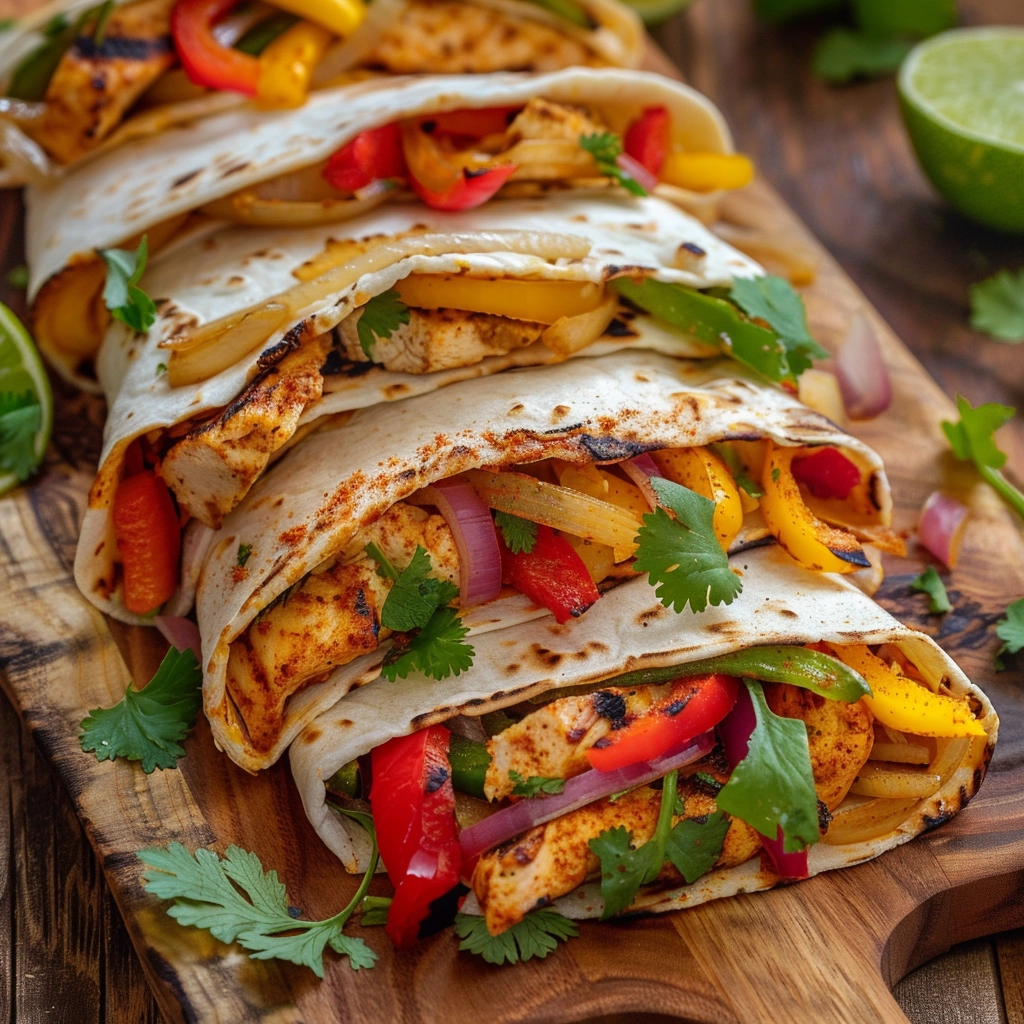
What makes Chicken Fajita Wraps so consistently popular is their perfect balance of practicality and excitement. They come together in under thirty minutes. They use affordable, widely available ingredients. They are infinitely customizable to suit any dietary preference or spice tolerance. They work equally well as a quick weeknight dinner, a crowd-pleasing weekend feast, a meal-prep staple, or a party spread where guests build their own. And they taste so vibrant, so bold, and so deeply satisfying that they never feel like the easy option — even when they absolutely are.
This article covers everything you need to make the perfect Chicken Fajita Wrap — the history behind the dish, the essential ingredients, a detailed step-by-step recipe, expert technique tips, serving ideas, creative variations, nutritional information, and a comprehensive FAQ section.
The Story Behind Fajitas and Their Journey to the Wrap
Fajitas have a history that is both humble and fascinating. The dish traces its origins to the ranch lands of the Rio Grande Valley in Texas, where Mexican vaqueros — cattle ranch workers — were often paid partially in beef scraps including the less desirable cuts of meat. The skirt steak, a tough, fibrous cut from the diaphragm muscle of the cow, was one such scrap. Ranch cooks discovered that marinating skirt steak in citrus juice and spices, then grilling it over open fire and slicing it thinly against the grain, transformed this overlooked cut into something genuinely delicious.
The dish migrated from ranch camps to Tex-Mex restaurants in the 1970s and 1980s, where it gained widespread popularity — in particular through a famous 1982 San Antonio menu introduction at Ninfa’s restaurant that is often credited with bringing fajitas to mainstream American dining consciousness. The theatrical sizzling platter presentation became iconic, and the dish spread rapidly across the country and eventually the world.
Chicken fajitas emerged as a natural evolution — offering the same bold seasoning, the same caramelized pepper-and-onion accompaniment, and the same warm tortilla delivery system as the original beef version, but with a lighter, more broadly appealing protein that suited a wider range of dietary preferences. The wrap format — enclosing everything inside a single folded or rolled tortilla rather than serving components separately — made the dish even more practical and portable, turning fajitas into a fully handheld meal ideal for casual dining.
What Makes a Perfect Chicken Fajita Wrap
Before exploring the recipe, it is worth understanding the specific elements that separate a truly outstanding Chicken Fajita Wrap from a merely adequate one.
The marinade is the first critical element. Chicken that has simply been seasoned with fajita spice blend before cooking is good. Chicken that has been marinated in a mixture of lime juice, oil, garlic, and spices for several hours is genuinely exceptional — tender, deeply flavored, and carrying the seasoning all the way through rather than merely on the surface.
The cooking temperature is the second. Fajita chicken demands high heat. The goal is a beautifully charred, caramelized exterior that develops through the Maillard reaction — the browning of proteins and sugars that creates hundreds of new flavor compounds. Low heat produces pale, steamed chicken that lacks the color and character that define authentic fajita flavor. Whether grilling or using a cast iron skillet, the heat must be high enough to produce visible char.
The pepper and onion technique is the third. Properly caramelized fajita peppers and onions — cooked over high heat until softened, lightly charred, and sweet — are a completely different ingredient from simply sautéed peppers. They require patience and genuine high heat, with minimal stirring to allow the vegetables to develop color rather than steaming in their own moisture.
The tortilla preparation is the fourth. A cold, straight-from-the-bag tortilla is far inferior to one that has been warmed directly over a flame or in a hot dry pan until it develops light char spots and becomes pliable, fragrant, and warm. This step takes thirty seconds and transforms the wrap entirely.
Key Ingredients
The Chicken
Boneless, skinless chicken breasts and chicken thighs are both excellent choices for fajita wraps, each with distinct advantages.
Chicken breast produces clean, lean strips that slice beautifully and have a firm, satisfying bite. It is the more widely used choice and produces the most visually attractive result — long, golden strips of chicken that lay elegantly inside the tortilla.
Chicken thigh is the more flavorful and forgiving option. Its higher fat content keeps it moist under high-heat cooking conditions and produces a slightly richer, more indulgent result. It is particularly well-suited to the grill or cast iron pan where the fat renders and contributes to excellent browning and caramelization.
For the best of both worlds, use a combination — equal parts breast and thigh — which provides both the lean, clean texture of the breast and the juicy richness of the thigh.
The Fajita Marinade
The marinade is the defining flavor element of the chicken and deserves careful preparation:
Classic Fajita Marinade:
- 3 tablespoons olive oil
- 3 tablespoons fresh lime juice (approximately 2 limes)
- 3 cloves garlic, finely minced
- 1½ teaspoons cumin
- 1½ teaspoons chili powder
- 1 teaspoon smoked paprika
- ½ teaspoon onion powder
- ½ teaspoon dried oregano
- ¼ teaspoon cayenne pepper
- 1 teaspoon salt
- ½ teaspoon freshly cracked black pepper
Combine all ingredients and whisk until uniform. The lime juice serves dual purposes — it flavors the chicken and its citric acid begins to denature the surface proteins, producing more tender meat. Do not marinate for longer than eight hours as prolonged acid exposure can make the texture mushy rather than tender.
The Peppers and Onions
The pepper and onion mixture is the soul of any fajita preparation and cannot be treated as an afterthought.
Bell peppers in multiple colors — red, yellow, and green — produce the most visually striking result. Red and yellow bell peppers are sweeter and more flavorful when caramelized. Green bell peppers are slightly more bitter and provide a color contrast. Slice them into strips approximately half an inch wide for the ideal texture and cooking rate.
White onion is the traditional fajita onion. Its flavor is sharper and more assertive than red or yellow onion, which suits the bold seasoning profile of the dish. Slice into half-moons of similar width to the pepper strips for even cooking.
Poblano peppers are an optional but excellent addition for those who enjoy mild-to-moderate heat alongside deeper, slightly earthy pepper flavor. Roasted poblano strips distribute beautifully through the pepper-onion mixture.
Season the vegetables with a light drizzle of oil, a pinch of cumin, chili powder, salt, and a squeeze of lime juice before cooking.
The Toppings
The toppings are what transform a good fajita wrap into a great one — each providing a specific flavor and texture function:
Guacamole or sliced avocado: The creamy, rich, cooling quality of avocado is the perfect counterpoint to the bold, spiced chicken. Freshly made guacamole with lime juice, cilantro, and a pinch of salt is ideal. Sliced avocado is a simpler, equally effective alternative.
Sour cream or Mexican crema: Cool, tangy, and rich — dairy provides relief from the heat of the spices and creates a silky layer inside the wrap that binds the other components together.
Fresh pico de gallo or salsa: The bright acidity, juicy tomato, and fresh cilantro of good pico de gallo cut through the richness of the chicken and cheese with a refreshing sharpness that keeps every bite lively and vibrant.
Shredded cheese: A Mexican cheese blend, Monterey Jack, or sharp cheddar adds a salty, melty richness. Scatter over the hot chicken so it softens slightly before the wrap is assembled.
Fresh cilantro: The herb of Tex-Mex cuisine adds a citrusy, herbal brightness that ties all the flavors together.
Pickled jalapeños or fresh jalapeño slices: For those who enjoy genuine heat, jalapeño slices add a bright, clean spiciness that complements the smoky depth of the chili powder and cumin.
Lime wedges: Always serve fresh lime wedges alongside — a final squeeze of lime juice over the assembled wrap immediately before eating brightens every flavor simultaneously.
The Tortilla
Large flour tortillas — 10 to 12 inches — are the definitive choice for chicken fajita wraps. Their neutral flavor, pliable texture, and substantial structure are perfectly suited to a generous, juicy filling. Warming is non-negotiable — hold each tortilla directly over a medium gas flame with tongs for 15 to 20 seconds per side, rotating for even charring, until it develops fragrant dark spots and becomes soft and pliable. This charring adds a subtle smokiness that harmonizes beautifully with the fajita seasoning.
Step-by-Step Recipe
Prep Time: 15 minutes Marinating Time: 30 minutes to 8 hours Cook Time: 20 minutes Total Time: 35 minutes active Servings: 4
Ingredients
For the chicken:
- 1.5 lbs boneless, skinless chicken breasts or thighs
- 3 tablespoons olive oil
- 3 tablespoons fresh lime juice
- 3 garlic cloves, minced
- 1½ teaspoons cumin
- 1½ teaspoons chili powder
- 1 teaspoon smoked paprika
- ½ teaspoon onion powder
- ½ teaspoon dried oregano
- ¼ teaspoon cayenne pepper
- 1 teaspoon salt and ½ teaspoon black pepper
For the peppers and onions:
- 1 red bell pepper, thinly sliced
- 1 yellow bell pepper, thinly sliced
- 1 green bell pepper, thinly sliced
- 1 large white onion, thinly sliced into half-moons
- 1 tablespoon olive oil
- ½ teaspoon cumin
- ½ teaspoon chili powder
- Salt and pepper to taste
- Squeeze of fresh lime juice
For the wraps:
- 4 large flour tortillas (10 to 12 inches)
- 1 cup guacamole or 2 ripe avocados, sliced
- ½ cup sour cream or Mexican crema
- ½ cup fresh pico de gallo or salsa
- 1 cup shredded Mexican cheese blend or Monterey Jack
- Fresh cilantro leaves
- Pickled or fresh jalapeño slices
- Lime wedges to serve
Instructions
Step 1 — Marinate the chicken. Whisk together the olive oil, lime juice, minced garlic, and all the spices in a bowl large enough to hold the chicken. Add the chicken breasts or thighs, turning to coat completely on all surfaces. Cover tightly with plastic wrap and marinate at room temperature for 30 minutes, or refrigerate for up to 8 hours for maximum flavor depth. Remove from the refrigerator 15 minutes before cooking to allow the chill to come off slightly.
Step 2 — Cook the chicken. Remove the chicken from the marinade and pat lightly dry with paper towels to remove excess surface marinade that would cause burning rather than browning. Heat a cast iron skillet or heavy grill pan over high heat until smoking. Add one tablespoon of oil and immediately add the chicken. Do not move it for the first 2 minutes — allow it to develop a deep, golden-brown sear. Cook for 6 to 7 minutes per side for breasts or 5 to 6 minutes per side for thighs until the internal temperature reaches 165°F (74°C) and the exterior is deeply caramelized. Transfer to a cutting board and rest for 5 full minutes.
Step 3 — Slice the chicken. After resting, slice the chicken against the grain into thin strips approximately half an inch wide. Slicing against the grain — perpendicular to the direction of the muscle fibers — shortens those fibers and produces noticeably more tender, easier-to-eat strips. Taste a piece and adjust with a pinch of salt or a squeeze of lime if needed.
Step 4 — Cook the peppers and onions. In the same skillet over high heat, add the remaining tablespoon of oil. Add the sliced peppers and onions in a single layer. Season with cumin, chili powder, salt, and pepper. Allow to cook undisturbed for 2 to 3 minutes until the underside develops charred spots — resist the urge to stir constantly. Toss and continue cooking for 3 to 4 more minutes until the vegetables are tender, lightly charred, and beginning to caramelize at the edges. Squeeze a little lime juice over the vegetables and remove from heat.
Step 5 — Warm the tortillas. Working one at a time, hold each tortilla directly over a medium gas flame using tongs for 15 to 20 seconds per side, rotating for even charring, until fragrant and pliable with visible char spots. Alternatively, heat in the dry skillet for 30 seconds per side. Stack the warmed tortillas in a clean kitchen towel to keep them warm and pliable during assembly.
Step 6 — Assemble the wraps. Lay a warm tortilla flat on a clean surface. Spread a generous tablespoon of sour cream across the center of the tortilla. Add a layer of chicken strips, followed by a generous portion of the pepper and onion mixture. Spoon guacamole alongside the chicken. Add pico de gallo, a scatter of shredded cheese, fresh cilantro leaves, and jalapeño slices if desired.
Step 7 — Roll and serve. Fold the left and right sides of the tortilla inward over the filling by about an inch. Starting from the bottom edge, roll the wrap firmly upward, maintaining consistent tension throughout to create a compact, secure wrap. Place seam-side down and allow to rest for one minute before slicing diagonally through the center. Serve immediately with lime wedges and extra sour cream, guacamole, and salsa alongside.
Expert Tips for the Best Chicken Fajita Wraps
Marinate overnight for maximum impact. A thirty-minute marinade produces good results. An overnight marinade produces chicken that is flavored all the way through, noticeably more tender due to extended acid and enzyme action from the lime juice, and significantly more delicious. Plan ahead when time allows.
High heat is essential. The distinctive charred, caramelized character of great fajita chicken cannot be achieved at medium or medium-high heat. The pan must be genuinely hot — to the point where a drop of water evaporates within a second of hitting the surface — before the chicken goes in. Use a cast iron skillet, a carbon steel pan, or a grill for the best high-heat performance.
Do not crowd the pan. Adding too much chicken at once drops the pan temperature immediately, causing the chicken to steam in its own moisture rather than sear. Cook in two batches if necessary, keeping the first batch warm in a low oven while the second cooks.
Rest the chicken before slicing. This instruction appears consistently across all good chicken recipes because it consistently produces better results. Five minutes of resting allows the juices driven to the center of the meat by heat to redistribute evenly, producing strips that are moist throughout rather than bleeding juice onto the cutting board.
Slice against the grain. Look at the surface of the cooked chicken breast or thigh and identify the direction of the muscle fibers — long, parallel lines visible on the surface. Slice perpendicular to these lines, not parallel. This cuts the tough muscle fibers short and produces strip that are tender and easy to chew rather than stringy.
Cook the peppers at genuine high heat with minimal stirring. The mistake most cooks make with fajita peppers is stirring them constantly, which causes them to steam rather than char. Place them in a single layer on a very hot surface, leave them completely undisturbed for two to three minutes to develop color, then toss and repeat. The caramelized edges and slight char are what give fajita peppers their distinctive sweet-smoky character.
Serving Suggestions
Chicken Fajita Wraps are among the most versatile meals available for serving in multiple contexts and formats.
The build-your-own fajita bar is one of the most beloved and practical serving formats — particularly for families, gatherings, and parties. Arrange the cooked chicken and peppers in warm serving dishes or skillets, set out all the toppings in individual bowls, stack the warm tortillas in a cloth-lined basket, and let everyone assemble their own wrap to their exact preferences. This format is interactive, accommodating of different tastes and dietary restrictions, and eliminates the pressure of assembling perfect wraps for each person simultaneously.
For a more casual meal, serve with a simple side of seasoned rice — Mexican red rice or cilantro-lime rice — and refried beans or black beans. These sides are deeply traditional alongside fajitas and complete the meal in a way that feels authentically satisfying. A fresh corn salsa with charred corn, red onion, cilantro, and lime juice alongside the wraps adds an additional fresh element that complements the bold fajita flavors beautifully.
For a lighter approach, serve the fajita chicken and pepper mixture over a bed of mixed greens with sliced avocado and a drizzle of the chipotle ranch dressing from the Southwest wrap recipe for a deconstructed fajita salad that preserves all the bold flavors in a lighter format.
Creative Variations
Sheet Pan Chicken Fajita Wraps: Spread the marinated chicken and sliced peppers and onions on a large rimmed baking sheet in a single layer. Roast at 425°F (220°C) for 20 to 25 minutes until the chicken is cooked through and the vegetables are tender and slightly charred at the edges. This hands-off approach requires minimal attention and produces excellent results with easy cleanup.
Slow Cooker Chicken Fajita Wraps: Place marinated chicken thighs, sliced peppers, onions, and a quarter cup of chicken broth in a slow cooker. Cook on low for 6 to 7 hours or on high for 3 to 4 hours until the chicken is tender enough to shred with two forks. This version produces pulled chicken fajita filling with a richer, deeper flavor than the quick-cooked version — ideal for feeding a large crowd with minimal active effort.
Grilled Chicken Fajita Wraps: Grill the marinated chicken whole on a preheated grill over medium-high direct heat for 6 to 7 minutes per side. Grill the peppers and onions in a grill basket alongside. The smoky char from the grill adds an authentic dimension that indoor cooking cannot fully replicate and is the most traditional preparation method for fajitas.
Breakfast Chicken Fajita Wraps: Use leftover fajita chicken and peppers as the base for a morning wrap — add scrambled eggs, a sprinkle of cheese, and a dollop of salsa for a hearty, protein-packed breakfast that uses leftover ingredients brilliantly.
Chicken Fajita Quesadilla: Place the cooked fajita chicken and pepper mixture with shredded cheese between two large flour tortillas and cook in a dry pan until golden and crispy on both sides with fully melted cheese inside. Slice into wedges and serve with sour cream and guacamole for a crowd-pleasing variation on the classic wrap.
Chipotle-Style Chicken Fajita Bowl: Skip the tortilla entirely and serve the fajita chicken and peppers over a base of cilantro-lime rice with black beans, corn, shredded lettuce, guacamole, pico de gallo, sour cream, and cheese for a deconstructed burrito bowl that is nutritionally dense and endlessly customizable.
Nutritional Information
Chicken Fajita Wraps are a nutritionally well-rounded meal that provides an excellent balance of protein, complex carbohydrates, healthy fats, and a wide spectrum of vitamins and minerals.
A standard wrap made with grilled chicken breast, multicolored bell peppers, onions, guacamole, sour cream, cheese, and pico de gallo in a flour tortilla provides approximately 520 to 620 calories, 38 to 46 grams of protein, 42 to 52 grams of carbohydrates, and 18 to 26 grams of fat.
The chicken delivers complete protein with all essential amino acids alongside B vitamins, phosphorus, and selenium. The multicolored bell peppers are an extraordinary source of vitamin C — red bell peppers in particular contain more vitamin C per gram than most citrus fruits — alongside vitamin A, folate, and lycopene. The onions provide quercetin, a flavonoid with documented antioxidant and anti-inflammatory properties, alongside prebiotic fiber that supports gut health. The avocado contributes heart-healthy monounsaturated fats, potassium, vitamin E, and additional dietary fiber.
For a lighter version, use chicken breast exclusively, reduce the cheese to a two-tablespoon scatter, use Greek yogurt in place of sour cream, and opt for a whole wheat flour tortilla. These adjustments reduce the calorie count to approximately 420 to 480 per wrap while maintaining all the bold flavors and textural interest that make these wraps so satisfying.
Frequently Asked Questions
Q1. How long should I marinate the chicken for fajita wraps?
A minimum of 30 minutes at room temperature produces noticeably better results than unseasoned chicken. A 4 to 8-hour refrigerator marinade produces excellent, deeply flavored results. An overnight marinade — up to 12 hours — produces the best possible flavor and tenderness. Do not marinate for longer than 12 hours as the lime juice will begin to denature the proteins excessively, producing a mushy rather than tender texture in the outer layers of the chicken.
Q2. Can I make the fajita filling ahead of time?
Yes — the cooked chicken and pepper-onion mixture keeps very well in the refrigerator for up to 4 days in separate airtight containers. Reheat the chicken in a hot skillet with a splash of chicken broth to prevent drying, and reheat the peppers and onions similarly. The flavors actually improve over the first 24 hours as the spices meld and deepen. This makes chicken fajita wraps an excellent meal prep option — assemble fresh wraps each day using pre-cooked filling.
Q3. What is the best pan for cooking fajita chicken?
A cast iron skillet is the ideal choice for stovetop fajita cooking. Its exceptional heat retention and even heat distribution produce the highest, most consistent pan temperature, which is essential for developing the char and caramelization that define great fajita chicken. Carbon steel pans are an excellent lighter alternative with similar heat performance. Stainless steel pans work well at high heat. Non-stick pans are not suitable for this application — their lower heat tolerance prevents the development of the browned crust that is central to fajita flavor.
Q4. Can I use chicken thighs instead of chicken breasts?
Absolutely — and many experienced cooks prefer thighs for fajita wraps. Chicken thighs have a higher fat content that keeps them moist and juicy under the high-heat cooking conditions that fajitas require, and they are more forgiving if slightly overcooked. Their richer flavor adds depth to the finished wrap that breast meat alone does not provide. The cooking time is similar — 5 to 6 minutes per side for thighs versus 6 to 7 minutes for breasts of similar thickness.
Q5. How do I make chicken fajita wraps less spicy?
Reduce or omit the cayenne pepper from the marinade — it is the primary source of heat in the spice blend. Use mild chili powder rather than hot varieties. Ensure the salsa and pico de gallo you use are labeled mild. Increase the quantity of sour cream or guacamole in the wrap — dairy fat and avocado fat both neutralize capsaicin effectively, reducing the perception of heat. Omit the jalapeño slices entirely from the topping selection.
Q6. Can I grill the chicken fajitas outdoors?
Yes — outdoor grilling is the most traditional and arguably the most delicious method for preparing fajita chicken. Preheat the grill to high heat and clean the grates thoroughly. Oil the grates lightly before adding the chicken to prevent sticking. Grill the marinated chicken for 6 to 7 minutes per side over direct high heat until deeply charred and cooked through. Grill the peppers and onions in a grill basket or on a grill pan alongside. The smoky flavor imparted by the grill adds an authentic character that brings the dish closer to its Tex-Mex origins.
Q7. What can I substitute for flour tortillas?
Corn tortillas are a more traditional and naturally gluten-free option that suits the Tex-Mex heritage of the dish. They are smaller — typically 6 inches — which means each serving uses two tortillas rather than one. Warm corn tortillas require careful handling as they crack more easily than flour tortillas. For a low-carb option, large romaine lettuce leaves or collard green leaves work well as wrap vessels. Whole wheat flour tortillas are an easy nutritional upgrade with a nuttier flavor. Cassava flour tortillas are an excellent grain-free, paleo-friendly alternative.
Q8. How do I prevent the wrap from getting soggy?
Three practices reliably prevent sogginess. First, spread the sour cream directly on the warm tortilla rather than on top of the filling — creating a moisture barrier between the wet ingredients and the tortilla surface. Second, allow the cooked chicken and peppers to drain briefly on a wire rack or paper towel before assembling — excess cooking juices will make the wrap wet within minutes. Third, add the pico de gallo or salsa last, immediately before rolling, rather than letting it sit inside the assembled wrap where it releases moisture continuously.
Conclusion
Chicken Fajita Wraps are the kind of meal that earns genuine excitement every time they appear — whether it is the first time someone tries them or the hundredth. There is something about the combination of boldly seasoned, deeply caramelized chicken, sweet and smoky peppers and onions, creamy guacamole, tangy sour cream, and fresh pico de gallo all bundled inside a warm, charred flour tortilla that feels simultaneously festive and deeply comforting. It is food that demands to be eaten with pleasure, and it rarely disappoints.
What this recipe teaches, above all else, is that bold food does not require complicated technique. The marinade takes five minutes to prepare. The cooking requires nothing beyond high heat and attentiveness. The assembly is a matter of layering thoughtfully and rolling with conviction. These are skills that any cook can develop quickly, and the results they produce — when combined with good ingredients and genuine care — rival anything available at a restaurant.


