Summer Fruit Salad Recipe – Fresh, Vibrant, and Ready in 10 Minutes
Everything in a summer fruit salad begins and ends with the quality of the fruit. A great dressing cannot save bland, underripe, or out-of-season fruit. But perfectly ripe, fragrant, in-season summer fruit needs almost no help at all.
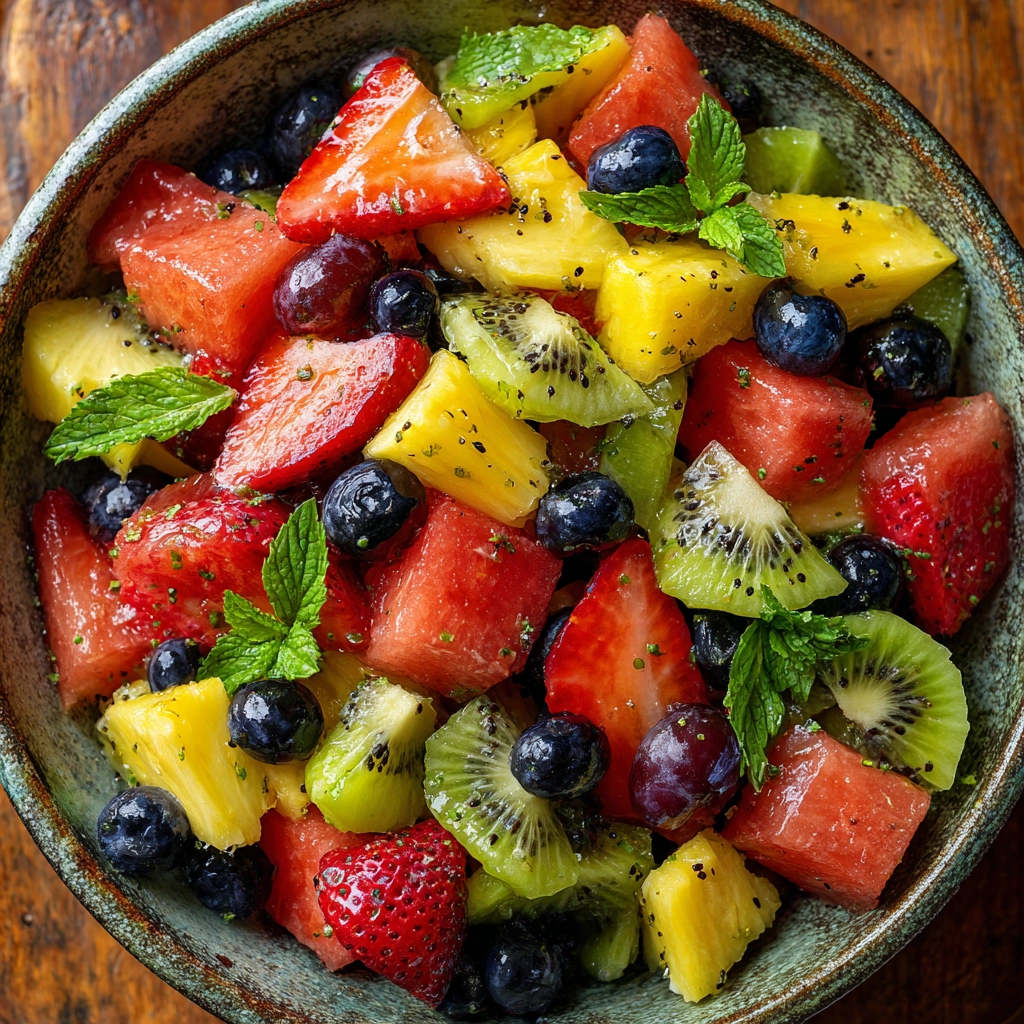
Here is what to look for and when:
Strawberries: Deep red all the way to the stem, fragrant from a foot away, slightly soft when pressed. Pale or white near the stem means underripe. Mushy means overripe. Bright red and fragrant is the target.
Watermelon: Heavy for its size, hollow sound when tapped, creamy yellow patch on the underside where it rested on the ground. That yellow patch means it ripened naturally in the field.
Mango: Yields gently to thumb pressure, smells fruity near the stem end. Color varies by variety so pressure and fragrance are more reliable than color alone.
Blueberries: Deep blue-purple with a dusty bloom on the surface. Firm to the touch. Avoid any that are red, shriveled, or soft.
Peaches: Fragrant, slightly soft near the stem, no green around the stem end. A peach that smells like peach will taste like peach. One that smells like nothing will taste like nothing.
Kiwi: Yields slightly to gentle pressure. Overly firm kiwi is tart and harsh. Properly ripe kiwi is sweet with a bright acidity.
Cherries: Deep red to near-black, firm, shiny. Avoid any that are light red, soft, or have shriveled skins.
The lesson: buy fruit that is in peak season for your region. In the height of summer, this is easy. The farmers market is always a better source than a supermarket for genuinely ripe summer fruit.
AT A GLANCE
- Prep Time: 10 minutes
- Rest Time: 15 minutes (optional but recommended)
- Cook Time: Zero
- Total Time: 10 to 25 minutes
- Servings: 6 to 8
- Calories Per Serving: 110 to 140 kcal
- Difficulty: Beginner
- Best Served: Within 2 hours of dressing
THE FRUIT LINEUP
Choose 5 to 7 of these for the best variety of color, texture, and flavor:
Sweet and Juicy:
- 2 cups watermelon, cubed or balled
- 2 cups cantaloupe or honeydew, cubed
- 1 cup fresh mango, cubed
- 1 cup fresh pineapple, cubed
- 1 cup fresh peaches or nectarines, sliced
Tart and Bright:
- 1 cup fresh strawberries, hulled and halved
- 1 cup fresh raspberries
- 1 cup fresh blueberries
- 1 cup fresh blackberries
- 1 cup fresh cherries, pitted and halved
- 2 fresh kiwi, peeled and sliced
Fresh and Unexpected:
- 1 cup seedless grapes, halved
- 1 cup fresh figs, quartered (when in season)
- 1 cup mandarin or clementine segments
The Honey Lime Mint Dressing:
- 2 tablespoons fresh lime juice (approximately 1 large lime)
- 1 tablespoon fresh lemon juice
- 2 tablespoons honey or agave syrup
- 1/4 teaspoon lime zest
- 2 tablespoons fresh mint leaves, finely chiffonade
- Pinch of fine sea salt
- Optional: 1/4 teaspoon fresh ginger, finely grated
For Finishing:
- Extra fresh mint leaves for garnish
- Lime zest curled over the top
- A small handful of pomegranate arils for color
- Toasted coconut flakes
- Crumbled feta (sounds unusual, tastes extraordinary with watermelon and mint)
HOW TO MAKE IT
Step 1: Make the Dressing First
Whisk lime juice, lemon juice, honey, lime zest, salt, and fresh ginger if using in a small bowl until the honey dissolves completely. Add the finely sliced mint and stir. Taste it – it should be sweet, bright, and fragrant. Set aside while you prepare the fruit. Even a few minutes allows the mint to infuse into the dressing.
Step 2: Prepare the Fruit
Work through each fruit systematically. Hull and halve the strawberries. Cube the watermelon and melon. Peel and cube the mango. Slice the peaches. Rinse all berries gently and dry carefully – wet berries make the salad watery. Pit the cherries. Peel and slice the kiwi. Segment the citrus. A sharp knife and a large cutting board make this the work of about 8 minutes.
Step 3: Combine Thoughtfully
Add the larger, more robust fruits to the bowl first – watermelon, melon, mango, pineapple. Add medium fruits next – strawberries, peaches, cherries, grapes. Add delicate fruits last – raspberries, blackberries, blueberries. This layering order means the delicate fruits do not get crushed under the weight of heavier pieces during mixing.
Step 4: Dress and Toss Gently
Pour the dressing over the fruit. Use a large spoon or clean hands to fold rather than stir – folding preserves the shape of delicate berries and keeps the presentation looking abundant rather than mashed. Every piece should be lightly coated.
Step 5: Rest or Serve
For immediate serving: plate and garnish now. For better flavor: allow the dressed fruit to rest at room temperature for 15 minutes. During this brief rest the fruit releases a small amount of its natural juice into the dressing, creating a more complex, syrupy sauce that tastes layered rather than one-dimensional. Do not rest for longer than 30 minutes or the fruit begins to soften and release too much liquid.
THE DRESSING – WHY EACH ELEMENT IS THERE
Lime juice provides the primary acid that brightens every fruit it touches. Acid makes sweet things taste sweeter and bland things taste more alive.
Lemon juice adds a slightly different citrus note that makes the acid dimension more complex than lime alone.
Honey dissolves into the acid and creates a sweet-tart balance that mimics what the best ripe fruit achieves naturally. Use less if the fruit is very ripe and sweet. Use slightly more if the fruit needs help.
Salt is the ingredient most people leave out and the one that makes the most difference. A pinch of salt in a fruit salad does not make it taste salty – it suppresses bitterness and amplifies sweetness in a way that makes the fruit taste more intensely of itself.
Fresh mint adds an herbal, cooling freshness that no other herb replicates in a summer fruit context.
Fresh ginger is optional but exceptional. A tiny amount adds a faint warmth and spice that makes the dressing feel more sophisticated without announcing itself as an identifiable flavor.
NUTRITION PER SERVING
Based on 7 servings using a mix of the suggested fruits with dressing:
| Nutrient | Amount |
|---|---|
| Calories | 110 to 140 kcal |
| Total Fat | 0.5 to 1g |
| Carbohydrates | 26 to 32g |
| Natural Sugar | 20 to 25g |
| Fiber | 3 to 5g |
| Protein | 1 to 2g |
| Vitamin C | 80 to 120 percent DV |
| Vitamin A | 20 to 35 percent DV |
| Potassium | 8 to 14 percent DV |
| Folate | 8 to 12 percent DV |
This salad is naturally vegan, gluten-free, dairy-free, and fat-free. The nutrition profile improves with every additional type of fruit included.
5 VERSIONS WORTH MAKING
Tropical Version
Use only pineapple, mango, papaya, kiwi, and coconut water as the dressing base instead of citrus juice. Add toasted coconut flakes and a squeeze of fresh lime. Skip the mint and use fresh basil instead. This version is all warm-weather sunshine with no nod to temperate climate fruits.
Berry Forward Version
Build the entire salad from strawberries, blueberries, raspberries, blackberries, and cherries. Dress with a balsamic-honey dressing – 1 tablespoon of good balsamic, 1 tablespoon honey, a squeeze of lemon. The balsamic against the berries is one of the best flavor combinations in summer cooking. Finish with fresh basil rather than mint.
Watermelon Feta Mint Version
Cubed watermelon, fresh mint leaves, crumbled feta cheese, and a simple dressing of lime juice, olive oil, honey, and a pinch of chili flakes. This combination has been celebrated in the Mediterranean and Middle East for decades. The salty feta against the sweet watermelon is exceptional. Add cucumber for extra freshness.
Stone Fruit Version
Peaches, nectarines, plums, apricots, and cherries only. Dress with a honey-vanilla dressing – 2 tablespoons honey, 1/2 teaspoon vanilla extract, 1 tablespoon lemon juice. Serve with a dollop of vanilla Greek yogurt on the side. This version works as both a salad and a dessert and is best made at the absolute peak of stone fruit season.
Citrus Winter Bridge Version
When summer fruits are no longer in season, build the same concept from blood oranges, clementines, grapefruit, kiwi, and pomegranate arils. Dress with a honey-ginger dressing. This version extends the fruit salad concept through winter months with a different but equally beautiful color palette.
FOR PARTIES AND GATHERINGS
Summer fruit salad is one of the best dishes to bring to any outdoor gathering. Here is how to handle it:
Transport the dressing separately in a sealed jar. Transport the cut fruit in a large airtight container or a sealed bowl. Combine and toss at the gathering just before serving. This approach gives you all the convenience of advance preparation without the soggy, watery result that comes from dressing fruit hours in advance.
For a buffet or picnic table, serve in a wide, shallow bowl rather than a deep vessel. The fruit is easier to serve, looks more abundant, and stays cooler spread out on a shallow surface.
For a more formal presentation, serve in individual glasses or small bowls with a sprig of mint and a lime wedge on each. This takes an extra five minutes and turns a casual side dish into something that looks genuinely considered.
Quantity guide for a crowd: plan on approximately 1 cup of prepared fruit salad per person as a side dish, or 1 and 1/2 cups per person if it is the primary dessert.
STORING AND TIMING
Best Window: Dressed fruit salad is at its peak in the first 30 to 60 minutes after dressing.
Refrigerator: Undressed cut fruit keeps covered in the refrigerator for up to 24 hours. Dressed fruit salad keeps for up to 6 hours but becomes progressively wetter as the salt and acid in the dressing continue drawing moisture from the fruit.
Avoid Freezing: Fruit salad does not freeze. The cell structure of the fruit is destroyed by freezing and the result after thawing is soft, waterlogged, and visually unappealing.
The practical approach: cut the fruit up to 24 hours ahead, store undressed and covered, make the dressing up to 48 hours ahead and store in a sealed jar, combine just before serving.
FOUR COMMON MISTAKES
QUICK ANSWERS
Can I add vegetables?
Cucumber and jicama both work surprisingly well in a summer fruit salad – they add crunch and a mild, fresh flavor that does not compete with the fruit. Sliced fennel is another unexpected but excellent addition alongside citrus segments.
Can I make it ahead for a party?
Yes. Cut all fruit and store covered in the refrigerator. Make dressing and store separately. Combine within 30 minutes of serving.
What herbs work besides mint? Fresh basil is wonderful with strawberries and peaches. Fresh tarragon has a slight anise note that works beautifully with tropical fruits. Fresh thyme pairs surprisingly well with stone fruits. Mint is the classic for good reason but these alternatives are worth exploring.
Can I add protein to make it a meal?
A generous scoop of vanilla Greek yogurt, a handful of granola, and a drizzle of honey alongside a large bowl of this fruit salad creates a complete, nutritious breakfast that requires no cooking. Cottage cheese is another excellent protein addition.
Is this safe for diabetics?
Fruit contains natural sugars and affects blood glucose. The salad has no added sugar beyond the small amount of honey in the dressing. Choices like berries and melon are lower on the glycemic index than tropical fruits. Consult a healthcare provider for guidance specific to individual needs.
THE SHORT VERSION
Pick the best fruit you can find. Cut it thoughtfully. Make a simple honey lime mint dressing. Dress just before serving. Add a pinch of salt. Let it rest fifteen minutes. That is it. The rest is just choosing which fruits to include – and that is the most enjoyable decision in the entire recipe.